Welcome to the Cioré Contributor Hub
Cioré is shaped by everyone who dares to approach technology from a new angle. Whether you bring research, creative problem-solving, or bold vision, this is where you’ll find the work, resources, and community to turn ideas into progress.
This Hub includes private team information. Please protect what is shared here and log out when you are finished, especially on a shared device.
Four ideas behind the phone
Privacy first
We aim to give our users more control over their data, limiting what passes between third parties and people they've never met, including through app sandboxing.
Solar-assisted
As we work toward fully solar power, we're starting with solar-assisted strips designed to pull energy from ambient light and the warmth of the skin.
Modular
We want our users to buy one device and upgrade individual pieces over time as their needs change.
Ethical materials & sourcing
We're always looking for healthier alternatives in what our devices are made of, and thinking carefully about where those materials come from.
Get started
Find Your Place to Jump In
Explore the current focus areas, see where support is welcome, and choose a next step that fits your skills or interests.
Community Essentials
Start with the resources that explain Cioré’s mission, how we work together, and where to find support.
Contribution record
Record Your Contribution Time
Keep a simple personal record of the time you contribute to Cioré. It is an easy way to document your participation, contributions, and progress over time.
Support & requests
Need Help or Have Something to Share?
Use one private route for tips, ideas, workflow feedback, support requests, verification requests, recommendation-letter requests, hours verification, non-project questions, private notes, or anonymous submissions.
When you're ready
Explore What We’re Researching
When you are ready, explore the research areas that help shape Cioré’s direction. These topics include active research, planning, prototype concepts, and future exploration. They are not final product promises.
Onboarding
Start Your Onboarding
Welcome to Cioré
Cioré is an early-stage modular smartphone and operating system research project. We are currently exploring hardware concepts, system architecture, and user experience possibilities through early prototypes and collaborative planning. Everything we do here is focused on open research, thoughtful testing, and long-term exploration.
Core resources & guide access
Core Resources & Guide Access
Before diving into active work, make sure you have reviewed the comprehensive contributor guide. You can return to it whenever you need detailed step-by-step instructions.
Essential Hub Pages
Orientation
Your First Steps
Complete these four steps to finish your orientation:
Review the Guide
Read through the external onboarding guide linked above.
Set Up Discord
Join our Discord HQ and update your profile to match our community formatting standards.
Introduce Yourself
Share a brief introduction in the Discord #introductions channel.
Explore Active Work
Visit our current project page to find research tasks and active collaboration areas.
Community setup
Discord Profile & Community Setup
Discord is our primary daily workspace. To help everyone coordinate smoothly across time zones and skill sets, update your server profile using the following guidelines.
Display Name Standard
Set your server nickname using this format:
Format
First Name - [Role] Contributor
Example: Alex - Hardware Research Contributor
DM Preferences
Please add your direct message preference to your profile or custom status:
Contributors may message you directly about Cioré research and tasks.
Contributors should ask you in a public/project channel before sending a direct message.
Please do not send direct messages. Use a public project channel or official support routes.
Discord Introduction Template
Copy and complete this short template when posting in #introductions:
Working style
How We Work
Work at Cioré is primarily independent and self-directed. We do not assign tasks individually to every contributor; instead, you are encouraged to take initiative in areas where you can contribute meaningfully.
Working Independently
Review ContextRead existing channel history, documentation, and research notes before jumping in.
Choose a TaskSelect an open task or research item aligned with your background.
Document Your WorkTrack your sources, methodologies, and findings clearly.
Share ProgressPost updates in the relevant Discord project channel so others can follow along.
Verify Before DecidingAsk questions in shared channels before assuming key design decisions or publishing external claims.
Project Manager Exception
If a specific research track or work area has a designated Project Manager or lead contact, please coordinate with them before beginning work and follow the established workflow for that project.
Ready when you are
Jump Into Current Work
Ready to begin? Head to our primary activation page to review open research areas, task boards, and active priorities.
What We Are Working On NowExpectations
Expectations & Confidentiality
Research Rigor
Base all research on clear sources, explicit assumptions, and verifiable findings.
Respectful Collaboration
We maintain a supportive environment for contributors of all skill levels. Refer to the Code of Conduct for complete standards.
Confidentiality
Do not share internal research notes, early prototype designs, or unannounced plans outside Cioré spaces without prior authorization.
How to Contribute Without Assigned Tasks
Many contributors join through our Give & Grow initiative because they connect deeply with Cioré's mission. Because we prioritize research and want you to contribute when you are in the best headspace, most work here is self-guided. Unless a specific project lists a designated Project Manager, you will not receive individual daily task assignments.
To get started:
Review the Hub
Check the Contributor Hub to see current research priorities and open project needs.
Choose Your Focus
Pick an open task or research area aligned with your background and interests.
Connect on Discord
Jump into the corresponding Discord channel to review recent history, share what you are working on, and collaborate with others.
Submitting work
Submitting Work, AI Guidelines & Research Collaboration
Share all completed research, work updates, and project notes directly in the relevant Discord channel.
AI Guidelines
As a research initiative focused on sustainability and thoughtful development, we are mindful of the broader impacts of artificial intelligence. Large AI models require significant energy and environmental resources to run, and they frequently generate biased, inaccurate, or outdated information.
Do not submit pure, unedited AI output. If you use AI tools to assist your research, you are responsible for checking facts against credible primary sources, fixing inaccuracies, and writing the final submission in your own words. Authentic human perspective and critical thinking are what make our research valuable.
Bringing Your Expertise & Updating Research
We do not know everything, and we do not expect you to either. Building Cioré is like putting together a puzzle, and every contributor brings a piece of that picture. If you notice outdated information, spot a source that does not align, or find newer research that improves an existing document, your input is highly welcomed.
Post directly in the relevant Discord project channel.
Message the founder directly.
Intellectual property
Intellectual Property & Confidentiality
Protecting Our Shared Work
All research, documentation, concepts, and assets created while contributing to Cioré belong to the organization, as outlined in the contributor agreement. We ask that you protect this work and keep it within our community spaces.
Practicing Confidentiality
Every document, file, link, draft, and discussion containing Cioré's name is internal and confidential. Joining this space means actively safeguarding that information.
To protect our research:
- Keep your Discord login credentials private.
- Log out of your account when using shared or public computers.
- Never screen-share or allow non-contributors to view private channels or files.
- Do not distribute internal links, project files, or research notes outside Cioré channels.
Space management
Inactivity & Space Management
We maintain an active, focused community using an automated Discord bot that tracks engagement through channel messages, replies, and post reactions.
10-Day Reminder
If you have not participated for 10 days, the bot sends a notification suggesting you react to a post or join an active discussion.
14-Day Soft Exit
If there is no activity by day 14, the bot automatically removes you from the server, and you will receive a follow-up email.
A Supportive Transition
This automatic process acts as a soft exit. If life gets busy and you need to step away, this process keeps our working channels clear without any hard feelings. You can rejoin when you have time to contribute again.
Beyond automated tracking, contributors who remain in the server without actively working on research or tasks may be removed manually. You joined Cioré to build something meaningful, so when you are here, jump in and participate.
Getting help
Know Where to Ask
| Inquiry or request type | Where to go |
|---|---|
| Project or research task questions | Relevant Discord project channel |
| Workspace documentation and workflow standards | Notion workspace linked in your project channel (check the "Start Here" or workflow guide pages) |
| Tips, workflow feedback, private notes, non-project questions, anonymous submissions, hours verification, or recommendation letters | Tips, Requests & Verification |
Keep track of your contributions
Record Your Contribution Time
As you contribute to Cioré, you can keep a simple record of your time, ideas, research, planning, documentation, and other contributions in one place. This can help you look back on your participation, request verified contribution hours when needed, or give the Founder useful context if you later ask for a recommendation letter.
You do not need to treat it like a requirement or overthink each entry. It is simply a helpful place to document what you contributed and how much time you chose to give.
Record Your Contribution TimeMission & values
Mission & Values
Cioré is exploring a more thoughtful direction for personal technology.
We're researching how a future phone experience could place more emphasis on user control, privacy, repairability, accessibility, responsible sourcing, and long-term usefulness. We're still early in the process, so we're honest about what is being researched, what is being planned, and what needs more evidence before it can become a commitment.
We're building this direction with contributors, communities, researchers, designers, and people who believe technology should serve people with more care.
Purpose
Our Mission
Cioré exists to explore and work toward technology that respects people, supports user control, and considers the lasting impact of the choices behind it.
We're interested in challenging assumptions about how phones are designed, repaired, powered, updated, communicated through, and understood by the people who use them.
This work is still developing. Many directions in the Contributor Hub are research areas, early concepts, or planning notes. They aren't final specifications, product promises, or confirmed outcomes.
Our values
What Guides Us
Truth
We're honest about what we know, what we don't know, and what still needs research, testing, evidence, or review.
We don't overstate progress. We don't present concepts, prototypes, or future exploration as finished products. When something is uncertain, we say so.
Transparency
We communicate clearly and explain our thinking when we can.
We document sources, assumptions, questions, tradeoffs, and changes in direction. We want contributors and future users to understand not only what we're exploring, but why.
Community Service
We stay connected to the people and communities technology affects.
We listen to lived experience, feedback, and concerns. We share knowledge responsibly, give back where we can, and remember that technology should improve people's lives instead of adding to their burden.
Legacy
We're working toward something that matters beyond the present moment.
We think about the long-term impact of technology on people, communities, workers, repairability, resources, privacy, and the environment. We want to build carefully enough that our choices can stand up over time.
Care and Safety
We're committed to creating a respectful, welcoming, and safer space for contributors, future users, collaborators, and communities.
Care shows up in how we communicate, how we respect boundaries, how we protect internal information, how we consider accessibility, and how we respond when something needs attention.
In practice
How These Values Show Up in Our Work
In research
We look for credible sources, state uncertainty, compare tradeoffs, and keep learning when evidence changes.
In communication
We use clear language, avoid unsupported claims, and make space for questions, feedback, and different perspectives.
In community
We respect people's names, pronouns, time zones, communication preferences, needs, and lived experience.
In product direction
We're researching approaches related to modularity, repairability, privacy, accessibility, responsible sourcing, energy and thermal questions, communication resilience, and user control. Every direction still requires its own research, technical validation, supplier evidence, security review, accessibility review, legal review, or hardware testing.
In decision-making
We don't treat a good idea as a final decision until it has the evidence, context, review, and care it needs.
Where we are
Our Responsibility as an Early-Stage Team
Being early-stage gives us room to learn, but it also gives us responsibility.
We're responsible for being clear when something is active work, research, a prototype concept, future exploration, or not a product claim. We're responsible for listening when people raise concerns. We're responsible for changing course when evidence, safety, accessibility, or community feedback shows that we should.
We won't always have every answer yet. We can still choose to be honest, thoughtful, and accountable while we work toward better ones.
Join us
A Space for Bold and Creative Minds
Cioré needs bold thinkers, careful researchers, creative problem-solvers, organizers, designers, writers, engineers, accessibility advocates, and people who care enough to ask better questions.
Your perspective matters here. You don't need to have every answer. You do need to bring curiosity, care, honesty, and a willingness to learn alongside others.
Next
Putting These Values Into Practice
Our Code of Conduct explains how we protect people, internal work, trust, and collaboration in everyday contributor spaces.
Review the Code of ConductCode of conduct
Code of Conduct
This Code of Conduct explains how we work together at Cioré.
By participating in Cioré spaces or workstreams, you agree to follow these standards. They apply in the Contributor Hub, Discord, project workspaces, meetings, email, calls, documents, and any public or private communication connected to Cioré.
Cioré is a community-led, early-stage organization. We're still researching, planning, testing, and learning. That means how we work matters just as much as what we're working toward.
1.Why This Exists
We're building Cioré around people, care, and honest work.
This Code helps create a space where contributors can ask questions, share ideas, collaborate respectfully, protect internal information, and raise concerns without fear of being dismissed.
We don't expect perfection. We do expect honesty, care, accountability, and a willingness to learn.
This Code is grounded in our shared values — Truth, Transparency, Community Service, Legacy, and Care and Safety. Read more on Mission & Values.
2.How We Work Together
Treat people with respect.
Be kind, professional, and fair in Discord, meetings, documents, email, and every other Cioré space.
Use people's correct names and pronouns. Respect time zones, availability, DM preferences, communication styles, and personal boundaries.
Communicate early.
If you're blocked, need more time, need context, or your availability changes, let the relevant project contact or channel know as early as you can. You don't need to have everything figured out before asking for help.
Give and receive feedback with care.
Be open to thoughtful feedback. Share concerns respectfully and focus on the work, not personal attacks. Assume good intent when reasonable, but don't ignore conduct that feels harmful, unsafe, or inappropriate.
Give credit.
Acknowledge other people's ideas, research, writing, designs, and contributions. Don't take credit for work that isn't yours.
Keep communication organized.
Use the appropriate Discord channel or project workspace whenever possible. If you're not sure where something belongs, ask. Keeping work in the right place helps everyone stay informed.
3.Independent Work and Project Guidance
Most contributor work at Cioré is self-directed.
You don't need to wait for someone to personally assign you a task before exploring an active work area. Review What We Are Working On Now, read the available project context, and choose a task or contribution that fits your skills, interests, and capacity.
When a project has a project manager or designated contact, coordinate with them before beginning. Follow the project's guidance, priorities, and communication process.
When no project contact is listed:
- Review the available research, task guidance, and project workspace before starting.
- Keep your notes, sources, drafts, files, and observations organized.
- Share progress, questions, and relevant context in the appropriate project channel.
- Ask before making assumptions that could affect safety, security, privacy, accessibility, supplier decisions, legal or regulatory questions, public statements, or product direction.
Independent work doesn't mean working alone. Ask for support when you need it.
4.Research Integrity and Responsible Tool Use
Cioré values careful research and honest communication.
When you share research, recommendations, comparisons, or findings:
- Identify your sources whenever possible.
- Separate facts, opinions, assumptions, and open questions.
- Explain uncertainty or missing evidence.
- Avoid copying information without checking where it came from.
- Don't present incomplete research as final company direction.
AI and other tools may help with brainstorming, organization, drafting, or analysis. You're still responsible for the work you submit.
Before sharing AI-assisted work:
- Check facts, sources, names, dates, claims, and technical details.
- Use your own judgment and add your own thinking.
- Don't submit unedited AI output as verified research or original contributor work.
- Don't upload confidential Cioré information into unapproved tools.
- Ask if you're unsure whether a tool is appropriate for internal material.
5.Research-Stage Language and Public Claims
Cioré is early-stage. Many topics in the Contributor Hub are research directions, planning notes, prototype concepts, or future explorations.
Don't describe these topics as finished products, confirmed features, final specifications, or public commitments.
Don't make unsupported claims about:
- Product availability, pricing, preorders, shipping, or launch dates.
- Privacy, security, encryption, safety, accessibility, sustainability, repairability, or performance.
- App compatibility, carrier support, emergency communications, range, certification, legal compliance, or regional availability.
- Suppliers, materials, labor practices, sourcing, battery chemistry, or environmental impact.
- Hardware features, operating-system capabilities, AI behavior, or technical outcomes.
Use accurate language such as:
- “Cioré is researching...”
- “Cioré is exploring...”
- “Cioré is working toward...”
- “This is an early concept...”
- “This needs technical validation...”
- “This is not yet a product promise...”
Don't speak publicly on behalf of Cioré unless the founder has approved the message.
6.Confidentiality and Access
What happens inside Cioré stays inside Cioré unless you have clear permission to share it.
Keep internal material private, including:
- Contributor information and directory details.
- Access codes, login details, Discord invites, and internal links.
- Research notes, planning documents, meeting notes, recordings, screenshots, and files.
- Prototype observations, design work, product concepts, supplier information, technical discussions, and internal decisions.
- Messages, conversations, or documents shared through the Contributor Hub, Discord, email, meetings, or project workspaces.
Don't share internal material outside approved Cioré spaces without explicit founder approval.
If you're unsure whether something can be shared, ask first.
Protect your access. Don't share your personal access code or invite links. Log out when using a shared device. Report suspicious access, accidental sharing, or a possible security issue to the founder as soon as possible.
7.Data, Tools, and Workspaces
Use approved Cioré tools and workspaces for contributor communication, file storage, research, and collaboration.
Don't move Cioré material into personal accounts, unapproved apps, public tools, or external platforms without permission.
If your work involves contributor, waitlist, survey, or other personal information:
- Handle it carefully.
- Only use it for approved Cioré work.
- Don't download, share, sell, reuse, or publish it.
- Ask before exporting, combining, or moving it into another tool.
8.Intellectual Property and Credit
[Legal review recommended before publishing this section.]
Work created specifically for Cioré as part of an agreed contributor role belongs to Cioré unless a written agreement says otherwise.
Your personal work, created outside Cioré and unrelated to Cioré work, remains yours.
Don't use Cioré's name, logo, trademarks, internal materials, or branding publicly without approval.
If you'd like to include non-confidential Cioré work in a portfolio, resume, case study, or social post, ask for founder approval first.
Always give credit where it's due. Don't use another contributor's work without acknowledgment or permission.
9.Conflicts of Interest
We ask for transparency, not perfection.
Let the founder know about outside work, relationships, employment, financial interests, or commitments that could reasonably conflict with your role at Cioré.
Don't use your contributor role to promote unrelated products, services, or organizations.
Don't use internal information, relationships, research, or workspaces for personal gain or for the benefit of another organization without written approval.
If you're unsure whether something is a conflict, ask early. There is no penalty for asking.
10.Harassment, Discrimination, and Harmful Conduct
Cioré doesn't tolerate harassment, discrimination, bullying, threats, hate speech, retaliation, or unwanted sexual attention.
This includes harmful comments, jokes, images, messages, behavior, or exclusion based on race, ethnicity, nationality, gender, gender identity, sexual orientation, disability, age, religion, immigration status, socioeconomic background, or any other protected or personal characteristic.
This applies in public and private spaces, including Discord, direct messages, calls, meetings, email, documents, and external spaces connected to Cioré.
Everyone deserves to participate without being demeaned, intimidated, targeted, or excluded.
11.Reporting Concerns
If you experience, witness, or learn about conduct that may violate this Code, please report it.
You can report concerns about:
- Harassment, discrimination, bullying, threats, or retaliation.
- Confidentiality breaches, data misuse, suspicious access, or internal information being shared.
- Conflicts of interest, misuse of Cioré resources, or intellectual-property concerns.
- Unsafe behavior, inappropriate public claims, or conduct that could put people or Cioré at risk.
Primary reporting route
[Contact the founder directly through Discord or the approved private contact route.]
Alternative reporting route
[Add a confidential contact or process for concerns involving the founder.]
Good-faith reports are welcome. Retaliation against someone who raises a concern in good faith isn't acceptable.
12.Accountability
We're a growing organization, and our processes will continue to improve. We'll approach concerns thoughtfully, fairly, and with appropriate privacy.
Depending on the situation, a response may include:
- A conversation, clarification, coaching, or request to stop certain behavior.
- A change in project access, communication expectations, or contributor responsibilities.
- Temporary or permanent removal from a workstream, Discord, or the Contributor Hub.
- Further action when needed to protect contributors, information, or Cioré.
Serious concerns involving harassment, threats, data misuse, theft, or unlawful conduct may require additional action.
[Legal review recommended.]
13.Your Agreement
By participating as a Cioré contributor, you confirm that you've read, understood, and agree to follow this Code of Conduct.
If anything in this document is unclear, ask before proceeding. We'd rather help you understand than have you guess.
Thank you for helping create a contributor space rooted in truth, transparency, community service, legacy, care, and respect.
Next
Continue Exploring the Hub
Revisit why Cioré exists and the principles guiding our research, community, and long-term direction.
Read Our Mission & ValuesPhone direction
The Phone
Cioré is exploring a phone that feels different from the phones most people are used to. We want it to feel smooth in our users’ hands, easier to understand, easier to repair, and more personal over time.
We’re still researching and building this direction. Some parts are early ideas. Some parts are being compared. Some may change as we learn more. This page gives our team the current shared direction so we can create, research, question, and contribute with the same starting point.
A quick note before you begin
This page is a guide for contributors, not a final product announcement. Please treat everything here as current direction and research context. If you notice something missing, unclear, outdated, or worth exploring, tell the founder on Discord.
Concept evolution
Concept Evolution
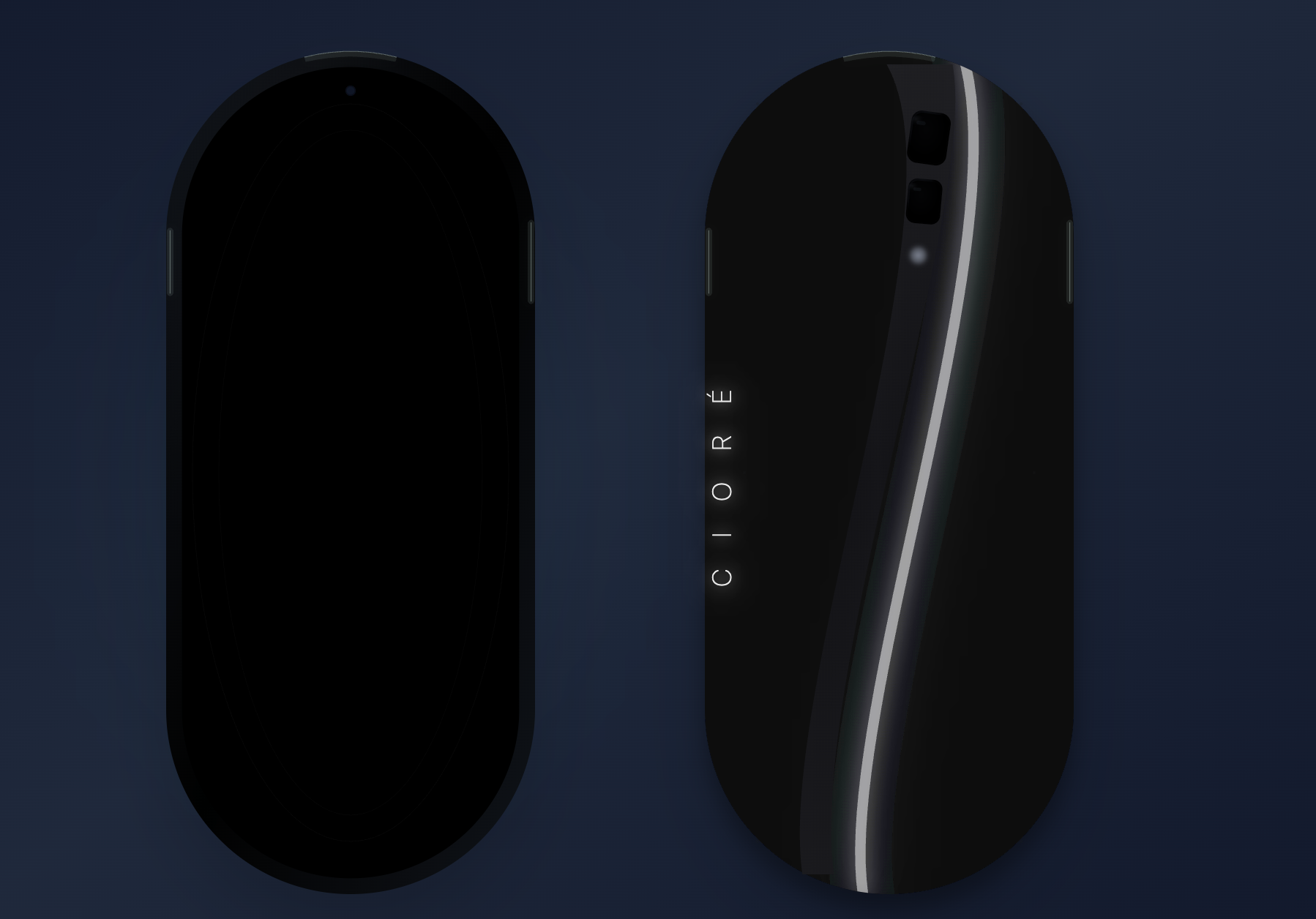
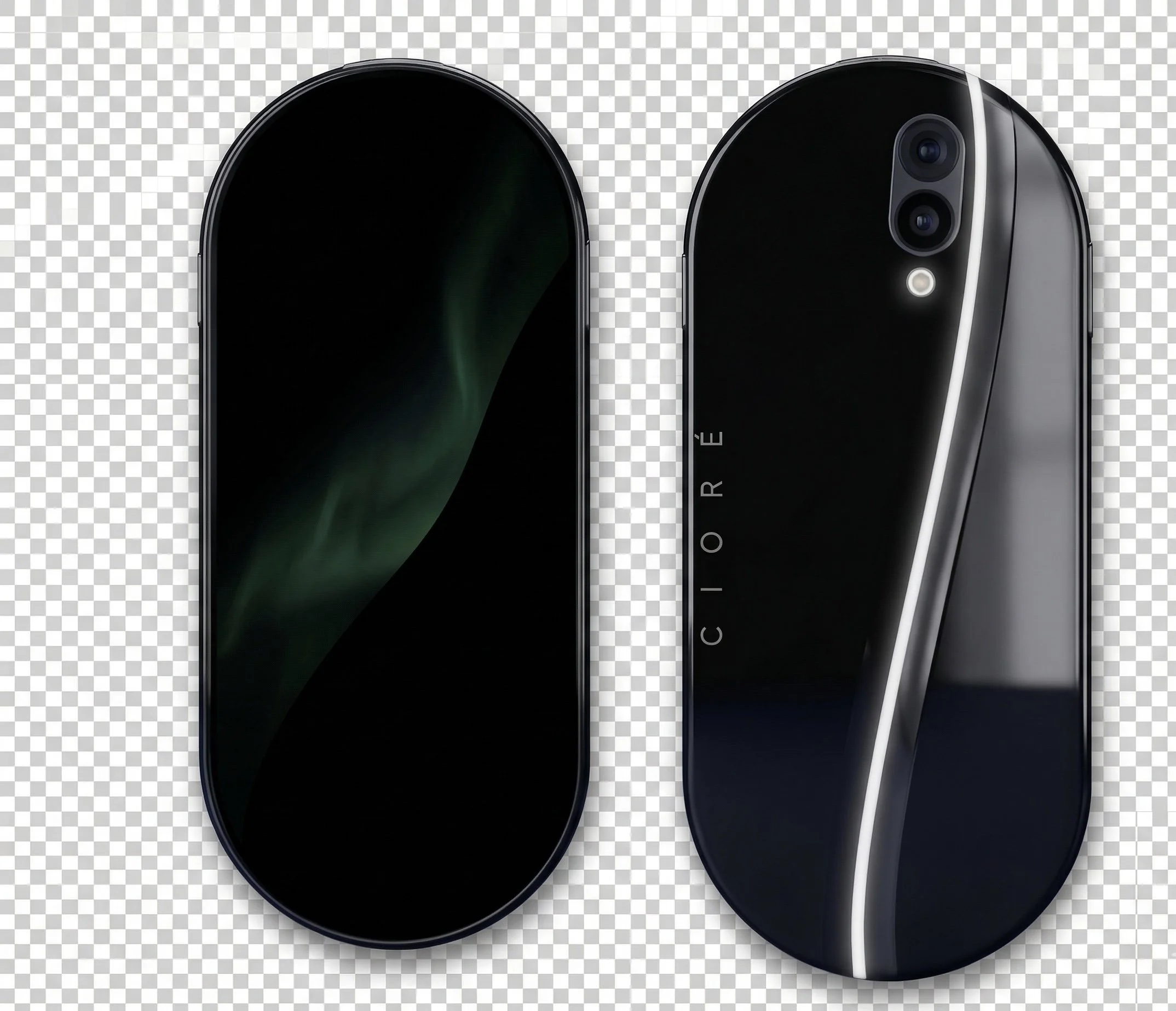
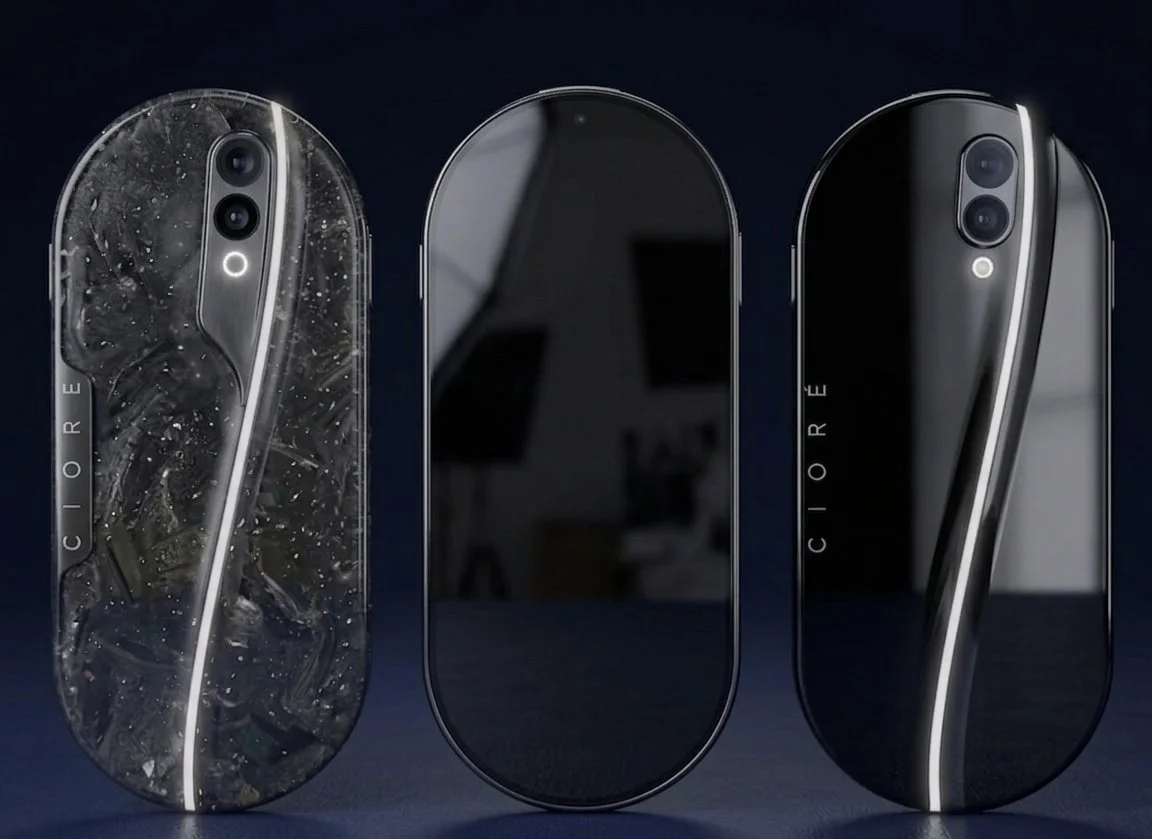
These visuals show the direction we are exploring. They are design studies, not final product renders, final materials, or final hardware specifications.
The feeling we are designing for
A phone that feels considered
Cioré is exploring a phone shaped around comfort, clarity, and long term care.
We want the phone to feel balanced in our users’ hands. We want to give people more choice around repair, charging, privacy, accessibility, and the physical parts they use every day.
The phone should feel like something a person keeps, cares for, and makes their own. It should not feel disposable.
Comfort
A body shape that aims to reduce harsh edges, pressure points, and awkward grip.
Control
Clear settings, thoughtful physical interaction, and options that do not rely on only one type of input.
Repair
Parts that can be researched for replacement, repair, or future updates instead of treating the whole phone as disposable.
Choice
More room for people to decide how they charge, store, use, and care for their device.
Physical direction
Why the phone is rounded
Cioré is exploring a continuous pill shaped body with fully rounded ends.
The goal is to learn whether this shape can feel balanced, smooth, and comfortable in our users’ hands during everyday use.
The rounded form is also part of the phone’s visual identity. It is meant to feel grounded, easy to recognize, and considered from every angle.
Current visual baseline
Dimensions for concepts and mockups
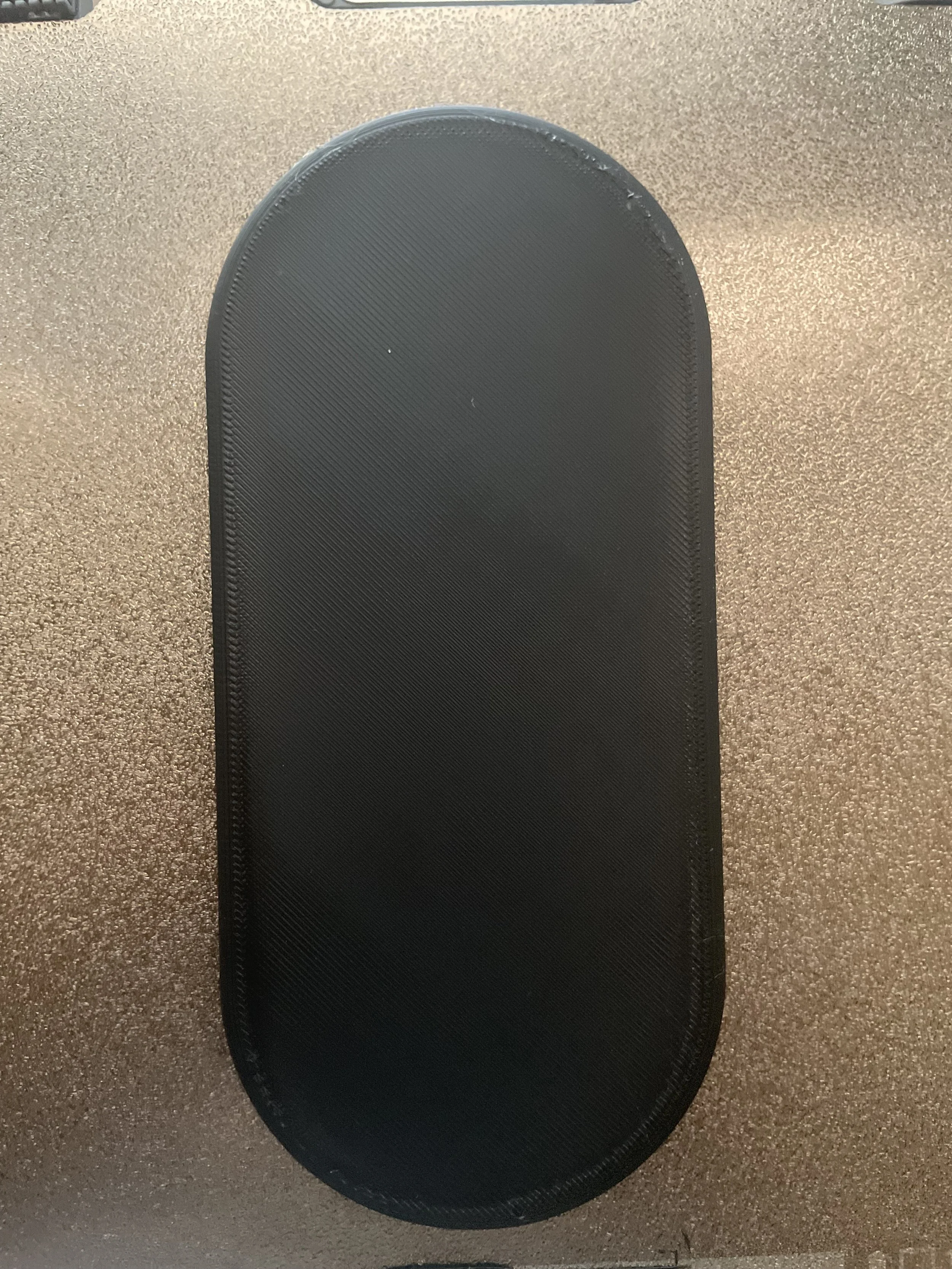
These measurements are the current starting point for research, visual concepts, mockups, cases, stands, grips, and early accessory ideas. They are not final production measurements.
| Part | Current baseline | What it is for |
|---|---|---|
| Height | 158 mm | Current concept and mockup baseline |
| Width | 72 mm | Current concept and mockup baseline |
| Thickness | 8 mm | Current concept and mockup baseline |
| Rounded end radius | 36 mm | Creates the continuous pill shaped body |
| Shell wall thickness | 1.2 mm | Early physical concept reference only |
If you make a visual, accessory, case, grip, stand, or concept based on these measurements, label it as an early Cioré concept. Share it in the relevant Discord channel so it can be reviewed with the rest of the work.
Materials and finish
A darker, more thoughtful surface
Cioré is exploring a dark smoked back surface that looks simple at first glance but can reveal depth, materials, or soft light in certain conditions.
We are also exploring recycled tempered glass for the front and back of the phone. The goal is to look at materials that can feel premium while supporting longer life, repair, and more thoughtful sourcing.
Nanocellulose is another material we want to research. It is a plant based material that may be useful as a thin reinforcement layer. We need to learn more about durability, heat, appearance, repairability, and how it could work with other materials before making decisions.
Recycled glass
We are exploring recycled tempered glass for the front and back of the phone.
Nanocellulose
We are researching whether a thin plant based reinforcement layer could support strength and reduce material impact.
Dark smoked finish
We are exploring a darker back surface with depth and a subtle view into the phone’s design language.
We are not making final claims yet about drop protection, scratch resistance, water resistance, recycled content, material safety, or long term durability.
The screen
A screen that is clear and easier to use
The display needs to look good, but it also needs to be easy to read, easy to adjust, and comfortable for different people.
We are exploring a high quality OLED display direction with deep blacks, strong readability, and a softer visual experience. We are also interested in ways to create a more transparent or layered look without making the screen harder to see or use.
What we want to research
- Text size and spacing
- High contrast options
- Brightness controls
- Color and motion settings
- Dyslexia friendly reading choices
- Low vision support
- Screen reader support
- Haptic, audio, and visual feedback
- Voice access
- Settings that are easy to find and understand
- Ways to reduce visual overload
A beautiful screen is not enough. If someone cannot read it, reach it, understand it, or use it comfortably, we need to keep working.
Controls and interaction
More than one way to use the phone
Cioré is exploring several ways people may interact with the phone, including touch, tactile controls, physical button options, audio feedback, haptic feedback, voice access, and on screen alternatives.
Touch and sensor directions
- Side tactile zones along the edges for swiping up or down, tapping, or holding
- Volume controls that respond to a swipe up or swipe down motion
- A top sensor area for single tap, double tap, or hold shortcuts such as camera, flashlight, or voice notes
- Assignable actions such as camera shortcuts, focus modes, media controls, or navigation
- A right side sensor direction for power control using a deliberate hold action
- Settings that let people choose whether side and top areas respond to taps, swipes, or holds
Accessibility and physical button choices
- Adjustable touch sensitivity, hold to confirm requirements, and options to turn off swipe gestures
- Physical dedicated button options and modular button attachments for people who prefer mechanical click feedback
- Grip attachments and case designs with larger physical controls
- Audio, visual, and haptic feedback options for every action
- On screen alternatives for every physical gesture
These controls are still being explored. We need to learn what feels natural, what prevents accidental touches, what works for left handed and right handed use, and what physical alternatives are needed for people with tremor, chronic pain, or limited dexterity.
We want to hear from people who use assistive technology, have tremor, chronic pain, limited grip strength, low vision, blindness, hearing differences, dyslexia, motion sensitivity, fatigue, or different hand sizes. Your feedback can change the direction of this work.
Ports and connections
Clear placement for everyday cords and storage
Cioré is exploring clear physical locations for cables and removable media to keep daily use comfortable.
USB-C on the bottom edge
Places the charging cord away from where hands naturally rest while holding the device.
3.5 mm wired audio on the top edge
Keeps headphone cords separate from bottom charging cables so wires stay clear of hand grip zones.
microSD access on the side
Explores a removable card option so people can easily keep, manage, and transfer their own files.
These are current placement directions under research, not final specifications.
Camera direction
A camera that fits the phone
Cioré is exploring a rear camera design that sits close to the back surface instead of creating a large raised bump.
The current direction is a two lens rear camera arrangement placed in a vertical ribbon that follows the phone’s asymmetrical curve. The goal is to keep the back of the phone feeling clean and balanced while still leaving room for the rest of the design.
We are also exploring a front camera that is visually quiet when it is not being used.
| Camera area | Current direction | Still needs research |
|---|---|---|
| Rear camera | Two lens vertical ribbon near the back surface | Sensor choice, image quality, low light performance, repairability, heat, and final placement |
| Front camera | A less noticeable front camera direction | Display integration, image quality, cost, repairability, and final placement |
| Camera bump | We are exploring a camera layout that stays close to the back surface while leaving room for protection, repair, and internal components | Final camera depth, lens protection, and internal space |
We want camera use to be clear and intentional. Hardware and software privacy controls still need research, including clear indicators when a camera or microphone is active.
The back of the phone
The Energy Backplate and rear rail
We are exploring ways the back of the phone can collect light energy while supporting physical attachments.
We are exploring a rear panel that fits directly into the phone’s shape and may collect supplemental energy from useful light. A central rear rail concept is also being explored to help align and attach future additions cleanly.
If the phone is placed face down in useful direct light, the Energy Backplate may be able to collect a small amount of extra energy over time.
The rear rail is an early direction. Its attachment method, strength, comfort, heat behavior, repair process, and compatibility with other parts still need research.
What we are exploring
- A rear panel that collects supplemental energy from direct sunlight
- A central rear rail concept that acts as a stable alignment and attachment guide
- Support for future keyboard modules, contoured grips, viewing stands, hands free supports, and larger accessibility buttons
- Whether bright outdoor light can add a small battery top up over time
- Whether indoor light can support a very small reserve or low power feature
- A dark, sleek back finish that still allows useful light to reach the energy layer
- A back panel that can be removed or replaced instead of permanently sealed in
What this does not mean
- It does not mean the phone will fully charge itself from sunlight
- It does not mean regular indoor lighting will quickly charge the phone
- It does not mean the phone charges from touch alone
- It does not replace USB-C charging
- It is not a finished feature
Charging direction
Simple charging at home and away
We want charging to feel simple. USB-C should remain a dependable way to charge the phone.
We are also exploring a separate charging base that could keep a portable backup battery ready to take with you.
At home, a person could charge the phone using a regular USB-C cable from the base. When leaving, they could take the charged portable battery for extra power.
What we are exploring
- A charging base with a USB-C cable
- A portable backup battery that stays charged while it is stored in the base
- A simple way to grab extra power before leaving home
- Compatible solar input for future off grid research
- Easy to understand battery status
- Charging that is easier for people with low vision, tremor, chronic pain, fatigue, or limited hand strength
- Replaceable parts instead of disposable charging accessories
The Energy Backplate and the charging base are meant to work together. The charging base and USB-C would handle dependable everyday charging. The back panel would be researched as a way to collect extra energy when useful light is available.
Light, warmth, and heat
Exploring extra energy without ignoring safety
We are researching small ways the phone may collect extra energy from sunlight, bright ambient light, and temperature differences around the device.
The light based part is the Energy Backplate. The warmth based part would use small test strips designed to collect a tiny amount of energy when one part is warmer and another part is cooler.
Touch by itself does not charge a phone. A warmth based strip needs a temperature difference. For example, a warm hand on one side and cooler air on another side may create a very small amount of energy.
What warmth based strips may be useful for
- Learning whether heat differences can support very low power features
- Exploring a tiny energy reserve
- Testing how light, heat, and stored power could work together
- Helping us understand what is realistic before making promises
What they are not expected to do
- Fully recharge the phone
- Replace USB-C
- Quickly raise the battery percentage
- Create meaningful charging energy from ordinary touch alone
Heat needs to be part of the design from the start
Sunlight can warm the back of a phone. Batteries also need safe temperatures. We need to research how to collect energy without making the phone too hot, uncomfortable to hold, or unsafe to charge.
- How hot the Energy Backplate gets in direct sunlight
- How to keep heat away from the battery
- How to spread heat instead of trapping it
- When energy collection should slow down or pause
- How cases, grips, and accessories affect heat
- How the phone should clearly tell someone when it is too warm
If the phone gets too warm, it should protect itself, pause or slow energy collection when needed, and explain what is happening in clear language.
Parts that can change
Built to be cared for over time
Cioré is exploring a phone that does not need to be replaced just because one part wears out or a new need comes up.
We want to research parts that may be easier to repair, replace, or update over time.
Battery
A battery direction that can be researched for replacement and longer use.
Energy Backplate
A rear panel that could be researched for replacement, repair, or future material updates.
Camera
Camera parts that could be researched for service or future changes.
Everyday parts
Speaker, audio, USB-C port board, vibration motor, and similar parts that may need repair during the life of a phone.
Future accessories
Grips, stands, keyboard ideas, rear rail modules, and other additions that may help people use the phone in ways that fit them better.
We are still researching how parts would connect, stay protected, remain comfortable, handle heat, and work with cases or accessories. Nothing here confirms a final repair process or replacement program.
What needs more work
Questions we still need help answering
This phone is still being designed. If you see something we need to question, compare, test, improve, or add, please bring it up.
Shape and comfort
- Does the rounded shape work across different hand sizes and ways of holding a phone
- What makes a phone feel secure without making it bulky
- What grip, stand, case, keyboard, or accessory ideas could make it easier to use
Accessibility and controls
- What control choices work best for different mobility, vision, hearing, reading, and sensory needs
- Should physical click buttons be offered alongside touch control strips
- What alternatives should exist when touch, swiping, or small controls are difficult
- What should be easier to find, read, hear, or feel
Materials, rear rail, and repair
- Which materials can balance appearance, durability, repair, and responsible sourcing
- How should the rear rail mechanism retain accessories safely without wobble
- How should internal parts be replaced or repaired
- How can the back panel remain useful without making the phone fragile
Energy and charging
- How much extra energy can the rear panel collect in real life
- How can the phone avoid overheating in sunlight
- How should the back panel, USB-C, charging base, and portable backup battery work together
- What would make off grid charging more useful without making everyday charging harder
Camera and screen
- How can the cameras fit the phone without creating a large bump
- What display choices make the phone clearer and easier to use
- How can camera and microphone use be visible and understandable
Help shape it
If you see a gap, tell us
This page is meant to give everyone the same starting point. It is not meant to close the conversation.
If you see something missing, outdated, unclear, or worth exploring, message the founder on Discord. You can also share a mockup, research note, module idea, accessibility concern, material comparison, charging idea, or question in the relevant project channel.
You do not need to wait until something is perfect to share it. A clear idea, useful source, thoughtful question, or early sketch can help move the work forward.
For current tasks and the newest research updates, visit What We Are Working On Now and check the relevant Discord project channel.
Research & Architecture
Modularity & Repairability
Cioré is exploring a phone that people can keep for longer, care for, repair, adapt, and potentially improve over time instead of replacing the entire device whenever one part wears out or their needs change.
We do not want the standard industry model where someone buys a new phone every time a battery weakens, a port wears down, a camera needs service, or they need a more comfortable way to hold their device.
This guide outlines our current research directions, physical concepts, structural tradeoffs, and open questions for modularity and repairability.
This page shares current research directions. It is not a final product announcement.
Product life
A Different Path for Product Life
Most modern smartphones are built as permanently sealed objects. While dense adhesive seals can help devices stay thin and water resistant, they can also make basic repairs difficult, expensive, or impractical for ordinary users.
Our long-term goal is not to encourage people to keep buying new phones. We want to make it more realistic for people to keep one Cioré phone longer.
Standard model
Minor damage or a worn part can lead to replacing the entire phone.
Cioré direction
A worn part, changing need, or comfort issue could lead to servicing a part or adapting the system.
This requires thinking about the device as a system that can be opened, maintained, and updated where safe and practical, supported by clear documentation and accessible design choices.
System approach
The Two Layers of Modularity
To keep our research structured, we divide modularity into two distinct layers.
The Repairable Core
The internal structure, primary fasteners, and serviceable electronic assemblies inside the phone body.
The Adaptable Outer System
Optional physical accessories, external control blocks, and mounting attachments that could change how the phone functions without opening the main casing.
These layers are connected, but they solve different problems. The repairable core focuses on maintaining the phone itself. The adaptable outer system focuses on helping the phone fit different needs over time.
Layer one
The Repairable Core
The repairable core focuses on how the phone itself is assembled and serviced. Cioré is exploring a continuous pill-shaped body as an early physical direction, paired with screw-based primary assembly instead of permanent adhesive-based sealing where practical.
We are researching the serviceability of these internal assemblies.
Primary Assembly and Fasteners
Evaluating standard screw types and internal structural frames that could allow opening the casing without specialized heating equipment.
User-Replaceable Battery Direction
Studying safe battery enclosures, connector designs, and battery-management circuits. This work requires validation around safety, swelling clearance, shipping regulations, and connector durability.
USB-C Port Assembly
Exploring a separate charging-port board so a worn physical port could be serviced without changing the main logic board.
Camera Assembly
Exploring camera housings that may allow service or potential future hardware changes if electrical standards permit.
Speaker and Audio Assemblies
Researching serviceable acoustic chambers for the main speaker and earpiece.
Vibration Motor
Exploring a haptic-engine assembly that could be more accessible during service.
Display Assembly
Researching display-mounting techniques that balance front-glass protection with more straightforward removal when a screen breaks.
Research boundary
Cioré does not currently have a live spare-parts program, factory, or certified repair network. We are testing physical-access concepts to understand what is feasible for a production device.
Layer two
The Adaptable Outer System
The outer system explores how optional external hardware could help the phone adapt to different users, accessibility requirements, and environments over time.
We are researching these external accessory directions.
Rear Attachment Rail Concept
A structural mounting strip or alignment guide on the back panel that could secure external accessories cleanly.
Grip Attachments and Cases
Ergonomic outer shells and contoured hand grips that could reduce pressure points and make the phone easier to hold during long tasks.
Modular Physical Buttons
External tactile controls that could complement touchscreen gestures for people who prefer physical clicks.
Keyboard Attachments
Physical typing accessories for detailed text entry, field documentation, or people who prefer tactile input.
Phone Stands and Mounting Interfaces
Hands-free viewing supports for desks, tripods, and workplace setups.
AM/FM Local Radio Blocks
External receiver accessories under research that could capture local radio broadcasts during offline or emergency situations.
Unresolved rail questions
The geometry, material composition, mechanical strength, retention force, electrical interface, heat behavior, antenna impact, and drop durability of the rear attachment system are active research topics and are not finalized.
Inclusive design
Designing for Accessible Repair
A phone can be technically repairable with tools, yet still remain inaccessible to the person holding it. Repairability also depends on the physical and cognitive friction of the repair process itself.
Technical repairability
Parts can be separated with tools.
Accessible repair
The repair process is clear, safe, and manageable for diverse human needs.
Barriers we are studying
Fine fasteners
Small screws can be difficult to see, hold, or align for people with tremor or low vision.
High opening force
Casings or clips can require high hand strength, pinch force, or prying leverage.
Delicate ribbon cables
Thin flex cables and small connectors can tear easily during handling.
Visual ambiguity
Internal components can be hard to identify if they lack clear orientation markings.
Complex instructions
Dense repair manuals can create unnecessary cognitive overload.
Potential solutions under review
Clear fastener choices
Evaluating larger, standardized screw drives that may resist stripping and reduce driver slipping.
Guided cable paths
Researching reinforced connectors and orientation marks that are color-coded but not dependent on color alone.
Step-by-step visual guides
Testing plain-language repair instructions with high-contrast diagrams, audio options, and video guidance.
Service boundaries
Clearly identifying tasks that may be suitable for user repair and tasks that may require trained technician support.
Engineering reality
Balancing the Tradeoffs
Modularity is not a free choice. Every removable panel, extra screw, connector, and external attachment introduces physical, electrical, and manufacturing tradeoffs.
| Objective | Engineering tradeoff | What we are researching |
|---|---|---|
| Screw assembly | May increase device thickness and frame weight compared with permanent adhesive assembly. | Structural frame materials and internal layout efficiency. |
| Water protection | Removable panels need gaskets and seals that can degrade or misalign. | Compression gaskets, O-rings, sealing strategy, and realistic ingress-protection boundaries. |
| Replaceable battery | A protective enclosure and safe connector system may reduce available space or energy density. | Battery pouch enclosures versus hard-shell battery-pack directions. |
| Rear attachment rail | May affect internal antennas, wireless signals, or heat dissipation. | RF-aware materials, thermal channels, attachment placement, and antenna clearance. |
| Modular connectors | Internal socket connectors use board space and can create long-term mechanical wear points. | Durable board-to-board connectors, contact plating, and connector lifecycle testing. |
| Spare-parts life | Supporting replacement parts over years creates inventory and logistics complexity. | Part standardization, compatibility planning, and sustainable support models. |
Circular direction
Circular Economy and Waste Context
Electronic waste is a growing global problem. The world generated approximately 62 million tonnes of e-waste in 2022, while only about 22 percent was documented as formally collected and recycled.
Modularity alone does not solve e-waste. A more responsible direction requires a full lifecycle approach focused on keeping materials in active use for as long as possible.
Keep
Design durable hardware that may remain useful for years.
Maintain
Create clearer paths to service worn parts where practical.
Adapt
Explore external accessories that could meet changing needs.
Reuse
Research whether suitable modules or structural parts could be refurbished for secondary use.
Recover
Explore responsible recycling and material recovery at true end of life.
Casing return pathway research
Cioré is exploring a future pathway where original Cioré casings and structural parts could potentially be returned, assessed, refurbished, or recovered for raw materials.
Reality check
Cioré does not have an active take-back or recycling program today. A return system depends on material choices, part condition, safe logistics, regional regulations, processing costs, and verified recycling partners. We are researching these requirements before making commitments.
Logistics research
Shipping, Returns and Repair Logistics
Shipping a replacement part directly to a person could reduce the need to ship whole devices back and forth. However, smaller individual packages still create an environmental footprint that must be considered carefully.
We are researching these logistics questions.
Right-sized packaging
Designing compact, lightweight containers that protect delicate electronics without unnecessary plastic fill.
Return-ready boxes
Testing reusable or dual-seal packaging concepts that could let people send worn parts back in the same box.
Diagnostic accuracy
Exploring how Lumé OS could help identify hardware issues before a replacement part is shipped, reducing unnecessary deliveries.
Consolidated shipping
Researching regional parts hubs that could shorten transit distances and consolidate repair shipments.
Safety and handling labels
Developing clear, compliant labels and instructions for handling worn or damaged lithium batteries safely.
A smaller shipment is not automatically lower impact. Distance, packaging, repair success, return rates, module durability, and the ability to reuse or recover the old part all matter.
Research stages
Research Phases and Staging
To stay focused, Cioré divides modularity work into staged research and development priorities.
Active work
Phase 1: Core Feasibility
- Physical form, comfort, and grip testing
- Opening methods and screw-assembly research
- Port placement and internal-space planning
- Early serviceability questions for battery and display
- Basic modular-button, grip, and stand concepts
Future work
Phase 2: Advanced System Integration
- Production-grade sealing and ingress-protection research
- Rear-attachment mechanism development
- Electrical interfaces and signal integrity for accessories
- Standardized repair manuals and diagnostic tools
- Logistics, return pathways, and parts-recovery infrastructure
Contributor research
How Contributors Can Help
Cioré needs research, analysis, design, and testing across multiple disciplines to move these concepts forward.
Hardware and Mechanical Research
Evaluate screw-drive types, internal frames, gasket materials, opening methods, and connector durability.
Accessibility and Inclusive Design
Identify barriers in physical repair tasks, test tool grips, and help design more accessible repair workflows.
Technical Writing and Documentation
Draft plain-language repair instructions, visual guides, component maps, and clear safety warnings.
Accessory and Ergonomic Design
Model, sketch, or test grip options, stand concepts, button blocks, keyboard directions, and case variations.
Thermal, RF and Battery Analysis
Research heat around removable panels, antenna clearance near attachments, and safer battery enclosure approaches.
Logistics and Circular Economy Research
Map repairability criteria, packaging options, return logistics, material-recovery pathways, and relevant regional e-waste requirements.
Next steps
Start with What We Know
If you are ready to research or contribute to Cioré’s modularity and repair directions, begin by reviewing the component guide and sharing clear, source-backed findings with the team.
Start with the component guide. Keep your sources, dates, findings, gaps, and open questions together. Then share a short update in 🌱・components-suppliers.
Operating system
Building Our Operating System
Cioré is planning Lumé OS as a custom hardened Android operating system based on AOSP, the Android Open Source Project. Lumé is intended to make privacy, accessibility, app control, and device settings easier to understand for people who do not want to become technology experts.
Lumé is in planning and early development preparation. The first technical build is intended for one supported stock Android reference device, internal testing, and selected invited waitlist testers. It is not a finished operating system, public download, carrier ready phone, or final Cioré hardware platform.
Current status. Founder direction and first build scope are defined. Reference device selection, AOSP branch, build environment, security architecture, app compatibility, Gaia signals, and accessibility implementation require technical validation and specialist review.
Internal Lumé documents
Read the Current Lumé Direction
These restricted internal documents explain the current Lumé OS product direction, first build scope, technical questions, and future research areas. They are intended to help contributors understand what is confirmed, what requires validation, and where their research can help.
These are restricted internal documents. You may need to request access after opening them.
Starting simply
Why Cioré Is Building Lumé
People can feel unsure about what apps, cameras, microphones, location services, and other device systems are doing with their personal information. Lumé is intended to help people understand what apps request, what choices they have, and where they can review those choices.
Lumé is designed for privacy minded users, people who are not technical, people with accessibility needs, families, caregivers, professionals, and people who want familiar apps where practical. The intended experience is calm, understandable, and customizable, built around clear choices rather than fear based messaging.
First build scope
What the First Build Focuses On
Lumé Settings Experience
Simple, searchable, organized settings that help users find what they need in plain language.
Lumé Privacy Center
A clear place to review selected sensitive app access, privacy choices, visible limits, and Gaia notices.
Plain Language Permission Experience
Clear explanations of what an app requests, why it may need access, what the user can choose, and what may stop working if access is limited.
Accessibility and Comfort Center
A central place for text, fonts, contrast, brightness, warmth, motion, sound, haptics, captions, voice, and other relevant preferences.
Gaia Indicator and Local Notice History
An optional local indication system for selected permission requests, user initiated privacy changes, and limited review suggested notices where technically supportable.
First build requirement. The first build validates a focused Lumé experience on one supported reference device. It does not attempt to deliver every future Lumé feature, every app compatibility outcome, or a production ready security platform.
Sandboxing and sharing
How Lumé Handles App Access
Lumé builds on Android app sandboxing and permission controls. Sandboxing means apps are placed in separate spaces so they cannot freely read each other's private data. Apps can still share information when a user intentionally asks them to do something useful, such as sending a photo, opening a map location, using a payment service, signing in, sharing a file, using a password manager, or using an accessibility tool.
Lumé's concern includes unnecessary data sharing connected to profiling, advertising, behavioral targeting, cross app tracking, spending habit targeting, and background collection. Lumé can use Android permissions, profiles, system sharing mechanisms, user controlled restrictions, and selected activity indicators where technically supportable. Lumé must not claim it can see, stop, or control every action inside every app.
| Useful sharing chosen by the user | Data sharing that needs review or control |
|---|---|
| Sending a photo to someone | Profiling based on app usage patterns |
| Opening a map location | Advertising and behavioral targeting |
| Using a payment service | Cross app tracking |
| Signing in to a familiar app | Spending habit targeting |
| Sharing a file | Background data collection |
| Using a password manager | Unnecessary sharing not requested by the user |
| Using an accessibility tool | Sharing without a clear user initiated reason |
User questions
What Lumé Can Help Users Understand
| User question | Lumé direction | What needs validation |
|---|---|---|
| What used my camera? | Show recent camera access in the Privacy Center where technically supportable | Which access events Android can reliably report |
| Why did this app ask for my contacts? | Explain the request in plain language when the app asks | Accuracy of app provided reasons |
| Can I turn off location for this app? | Point to the relevant Android permission control | Effect on app functionality per app |
| Can this app run in the background? | Surface the setting in plain language | Battery and performance tradeoffs |
| Does this app depend on Google Play or another outside service? | Note known dependencies where identifiable | Reliable detection across apps |
| Can I place this app in a separate profile? | Research direction, depends on Android profile support | Device and Android version support |
| Can Lumé explain what this privacy setting changes? | Plain language explanation goal for every setting | Writing accuracy and technical review |
| Can Gaia explain why this notice appeared? | Research direction for defined, testable signals only | Whether a clear, accurate explanation is technically possible |
Lumé can only act within the capabilities supported by Android, the device, the app, and the user's chosen settings. Some app behavior may remain outside Lumé's visibility or control. Lumé should explain those limits clearly.
Research direction
Gaia and User Control
Gaia is Lumé's optional, on device indication and automation direction. Gaia is not a chatbot, not generative AI, not a required assistant, and not a system that reads private app content.
First build Gaia signals are limited to sensitive permission requests, user initiated privacy and settings changes, and limited review suggested notices where a rule is clearly defined and technically supportable.
AI related indicators remain research direction unless the engineering firm identifies a signal that is clearly defined, reliably observable, understandable to users, and tested for accuracy. Gaia must not imply that it can identify every AI feature, every tracker, every network connection, or every hidden app behavior.
Core requirement
Accessibility and Comfort
Accessibility is a core Lumé product requirement and an ongoing research process. Lumé is being designed around large text, text reflow, font choice, dyslexia friendly options, contrast, brightness, warmth, motion reduction, captions, sound, haptics, voice access, speech differences, dexterity, cognitive clarity, caregiver support, and settings recovery.
Lumé should give users the choice to set up comfort and accessibility preferences during setup or later. Users should be able to save preferences, return to them, and recover from accidental changes where technically feasible.
Contributor research needs
Modes and profiles
Modes and Profiles
First build requirement
Consumer Mode
The default experience for everyday personal use. It focuses on calm privacy minded use of apps, calls, messages, accessible controls, and the Lumé Privacy Center.
Research direction
Business Mode
A future direction for professionals and organizations handling sensitive information. It requires security, privacy, legal, accessibility, and enterprise mobility review.
Research direction
Parent or Caregiver Mode
A future direction for parents, caregivers, children, teenagers, older adults, and dependent users. It requires child privacy, caregiver research, security review, accessibility review, and legal review.
Research direction
Gamer Mode
A future direction for user controlled display, sound, haptics, notification, battery, heat, and network preferences during gaming. It requires device specific performance validation.
Future direction
Travel Mode
A future research direction for people using phones across countries, unfamiliar networks, public Wi Fi, and changing connectivity conditions.
App compatibility
App Compatibility and User Choice
Lumé aims to support familiar apps where practical. Compatibility depends on the selected device, Android version, required services, app developer choices, security restrictions, and user settings. Lumé should explain those dependencies clearly rather than promise universal compatibility.
First build compatibility priorities
Later compatibility research
Cioré will not test every app within a category in the first build. The engineering firm and Cioré will select a small, representative set of priority apps after the reference device and AOSP foundation are selected.
Long term support
Updates, Device Care, and Future Hardware
Lumé needs ongoing maintenance, security patches, compatibility work, testing, documentation, update delivery, and support planning. Updates should preserve user preferences whenever possible. Privacy settings, app permissions, accessibility preferences, display settings, sound settings, account choices, network preferences, Gaia settings, profile boundaries, and user created restrictions should not change silently.
Device Care and Repair Mode are future directions connected to repair minded Cioré hardware, including work described on The Phone and Modularity & Repairability pages, along with the energy directions on the How We Want the Phone to Charge page. The first reference device build helps validate Lumé's experience. It does not prove final Cioré hardware capabilities.
Scope boundaries
What Is Outside the First Build
These directions remain important, but they require additional engineering, hardware, carrier, legal, security, accessibility, policy, or operational work before Cioré can present them as product capabilities.
Get involved
How Contributors Can Help
Use the full Lumé product documents before beginning research. Keep sources, dates, assumptions, findings, gaps, and open questions together. Share a short update in the operating system channel or with the founder.
Contributors do not have unrestricted access to source code, credentials, signing keys, private user data, restricted systems, or sensitive security materials.
Specialist review
First Build and Firm Review
Cioré is preparing to work with an Android platform engineering firm to validate the first Lumé build. The firm will recommend the reference device, AOSP branch, build environment, feasible Privacy Center data, limited Gaia signals, app compatibility test list, security architecture, accessibility scope, and the first build scope that can be responsibly delivered.
Privacy awareness and control
Gaia
Gaia is a proposed privacy awareness and control layer for Lumé OS. It’s being explored to help people notice when an app may be using, sharing, connecting, or inferring information in ways that affect privacy and personal control.
Gaia isn’t a chatbot or a required AI feature. It’s a way to make important activity easier to see, easier to understand, and easier to question.
A quick note before you begin
Gaia is a research direction. It may not be able to see or control every action inside every app. The goal is to be clear about what Gaia knows, what an app says it is doing, what Gaia cannot verify, and what choices someone still has.
Why Gaia changed direction
From assistant idea to privacy awareness
Earlier direction
A broader assistant and support concept.
What we heard
Many people want less AI built into their phone, not more.
Current direction
A privacy awareness and control layer that helps people see and choose.
Gaia is now being reshaped around clear information and clear choices.
Privacy related activity
What Gaia could notice
Gaia is researching known or observable privacy related activity. It may be able to notice, explain, or show:
Gaia may be able to notice some activity directly. Other activity may be declared by an app. Sometimes Gaia may not be able to verify what happens after information leaves the phone.
A clear notice
What a Gaia notice could look like
Gaia notice
This app is trying to use your activity patterns to estimate spending habits and send that information to an outside service.
- Information involved
- Recent app activity and purchase related data
- What may happen
- A profile may be created or updated outside this phone
- Review details
- Allow once
- Limit access
- Block if possible
The final wording should be clear about what Gaia knows, what the app says it’s doing, and what Gaia can’t verify.
AI related activity
Making AI related activity easier to notice
AI related activity remains an important Gaia research area. Gaia may help someone see when an app uses a known or declared AI related feature.
Gaia notice
This app is using an AI related feature.
- What it’s doing
- Creating a summary from text you selected
- Information involved
- The text you selected
- Where it may happen
- Continue
- Allow once
- Review settings
- Block if possible
Gaia shouldn’t assume someone wants AI enabled. It should make AI related activity easier to notice and easier to question.
More context than a permission ask
Permissions are only one part of the picture
A permission ask can tell someone that an app wants access. Gaia is being explored to help explain what may happen next, what information may be involved, what choices are available, and whether limiting access may affect the app.
| A permission prompt can help show | Gaia is exploring how to explain |
|---|---|
| Camera access | What the app may do with a camera input and whether the input may leave the phone |
| Microphone access | Whether sound may be processed on the phone or sent to an outside service |
| Location access | Whether location may be used to build patterns, suggestions, or a profile |
| Photo and file access | Whether selected content may be shared with another service |
| Contacts access | Why an app needs contacts and whether it may connect them to outside services |
| App activity | Whether behavior patterns may be used to estimate habits, interests, or spending |
| AI related activity | Whether a known or declared AI feature is involved and what Gaia can verify |
App information and changes
Gaia reviewed and Gaia notices
Gaia reviewed
A Gaia reviewed label may show that an app’s known privacy related behavior has been reviewed against Cioré’s current expectations and that important available information is easier to find.
It doesn’t mean the app is perfect, risk free, or permanently approved. Apps can change. Reviews need to be revisited.
A Gaia reviewed app may show
- What information it says it uses
- Whether it declares AI related features
- Whether known outside services are involved
- What privacy choices a person can change
- Important limits or questions that still need attention
Gaia notice
Gaia uses a notice when something needs a person’s attention instead of quietly deciding for them.
Gaia notice
This app has changed how it handles information.
- What changed
- It now requests location access while running in the background.
- Review the change
- Keep current access
- Limit access
- Turn off access
Personal choice
What choices could look like
| Choice | What it means |
|---|---|
| Allow once | Let this activity happen one time |
| Ask every time | Show a notice before this activity happens again |
| Limit access | Remove access to information that isn’t needed |
| Block if possible | Stop a known connection or feature when Lumé OS can do that safely |
| Review later | Save the activity in Gaia so the person can look at it again |
| Remove the app | Delete the app if the person doesn’t want to accept its choices or limits |
Clear about tradeoffs
If limiting something may affect an app, Gaia should say so plainly.
Limiting this connection may stop this feature from working. The rest of the app may still work normally.
Being honest about limits
What Gaia cannot promise
Gaia must remain realistic about its technical boundaries.
- Gaia may not be able to see every action happening inside every app
- Gaia may not know whether an outside service uses AI after information leaves the phone
- Gaia may not be able to block an activity without affecting an app
- Gaia may not be able to verify every claim an app makes
- Gaia can’t make privacy choices for someone
- Gaia can’t protect someone from every privacy risk
Gaia status
We can see that this app is sending selected text to an outside service.
We can’t verify what happens after it reaches that service.
- Allow this
- Limit access
- Review privacy details
Accessible by design
Accessibility and clarity
Gaia notices need to work in more than one way.
A privacy notice only helps if someone can read it, hear it, understand it, and act on it.
Open research
What we need to research
What Gaia can see
- Which privacy related actions Lumé OS can reliably notice
- What activity can be explained without Gaia reading private content
- How to distinguish confirmed activity, app declared activity, and activity Gaia can’t verify
- How apps could share clearer information about what they do
What Gaia can control
- Which permissions Gaia can help limit
- When a known connection can be blocked
- How app separation can reduce unwanted information sharing
- How to explain when blocking a feature may affect an app
What people need
- Which notices feel useful rather than overwhelming
- What words people understand when talking about tracking, sharing, profiles, AI, and outside services
- How people want Gaia to communicate
- What someone wants to know before installing, opening, or trusting an app
- How a Gaia reviewed label can stay useful without becoming a guarantee
Accessibility and trust
- How notices work for different access needs
- How people can change their choices later
- How Gaia can avoid becoming another system that collects too much information
- How Gaia can say “we don’t know” clearly when it can’t verify something
Help shape Gaia
How contributors can help
Good fit if you enjoy
- Privacy research
- Security research
- Operating system design
- App permissions
- Accessibility
- Plain language writing
- User research
- Interface design
- Policy research
- Technical documentation
Ways to help
- Research what Lumé OS may be able to observe and control
- Compare privacy notice patterns and permission flows
- Draft short and understandable Gaia notices
- Research how apps create profiles from behavior patterns
- Map what an app may access, infer, send, or keep
- Research app separation and permission control patterns
- Test notification ideas with people who use assistive technology
- Identify language that’s clear without being alarming
- Research how a reviewed app label can stay honest and up to date
- Identify situations where Gaia should explain a limit instead of pretending it can block something
For current Gaia research and ways to help, visit What We Are Working On Now.
The purpose of Gaia
Gaia isn’t here to make choices for people. It’s being explored to help people see what’s happening, understand what it may mean, and decide what they’re comfortable with.
Energy and charging
How We Want the Phone to Charge
Cioré is researching a more thoughtful approach to power. Nyro begins with dependable USB-C charging, then explores how a personal energy system can collect, store, and share energy over time.
Our first focus is Star, a Nyro power-base concept. Star is being explored as a way to collect energy mainly from sunlight, store it in a protected reserve, and make that stored energy available to charge a Cioré phone and other small devices when needed.
This page explains what Cioré is actively researching, what remains a future direction, and what needs measurement or engineering validation before it becomes a product promise.
Current research status. Nyro is active research. USB-C remains the dependable everyday charging baseline. Star is the first power-base direction Cioré wants to understand. The Energy Backplate, wireless charging, and other future concepts remain research tracks that depend on evidence, engineering, safety, accessibility, and user testing.
Team reference
Want the full picture in one place? The Nyro one pager summarizes this direction for the team.
Open the Nyro One PagerThis document is restricted to contributors with founder approval. You will need to click the link and request access before you can view it.
Research status guide
How to Read Research Status on This Page
Work Cioré is currently organizing, reviewing, measuring, or preparing to test.
The earliest practical direction Cioré wants to validate before building more complex concepts.
A concept that remains important but depends on earlier evidence, engineering, or funding.
A concept that may support tiny sensing or logging functions but is not expected to charge the main phone battery.
Information that Cioré must not describe publicly as confirmed performance, availability, compatibility, safety, sustainability, or charging behavior.
The energy system
Nyro: Cioré's Energy and Thermal Direction
Nyro is Cioré's developing energy and thermal direction. It brings together how a phone receives power, stores it, protects its battery, manages heat, explains energy use, and may use carefully tested supplemental energy inputs over time.
Cioré
Nyro
Energy, charging, battery health, heat, and power research
Star
Nyro's first personal power-base research concept
Star Home and Star Travel
Future power-base and portable-reserve research directions
Star is not a separate operating system, company, or completed product line. It is a physical power concept being explored under Nyro.
The long-term purpose
Why Cioré Is Exploring Nyro
Cioré's long-term goal is to reduce how often people need to depend on a wall outlet to keep their phone powered.
We are exploring whether a personal energy system can collect useful energy from sunlight, store it safely, and make that energy available later when a phone needs power.
The first version of this idea is not a promise that a phone will never need to plug in. It is a research path toward giving people more independence, more backup power, and more control over how they keep their devices charged.
Nyro is working toward less wall dependence over time. USB-C remains the dependable everyday charging baseline while Cioré measures what sunlight, storage, and future accessories can realistically add.
First exploration
Star at a Glance
Star is Cioré's first Nyro power-base research concept.
In simple terms, Star is a power bank that Cioré is researching to do more than store wall power. Star may collect useful energy mainly from sunlight, safely store that energy in a protected reserve, and later use that stored energy to charge a Cioré phone and other small devices.
Star is not a finished product. It is Cioré's first practical research direction for learning how a personal energy system could help people depend less on wall outlets over time.
If you see a Nyro term below that is unfamiliar, continue to the Energy Words in Plain Language section further down this page.
Collect
Active researchUseful Light In
Star is being researched to collect energy mainly from sunlight. Ambient light, such as window or room light, is also being studied as a smaller supplemental input.
Manage
Needs engineering validationPower Controller
A power controller is the safety electronics that manage changing energy input before it reaches storage. Cioré needs engineering validation before selecting one.
Store
Active researchProtected Energy Reserve
Star may store collected energy in a protected rechargeable reserve, similar to a power bank. The final battery type, size, capacity, and safety design have not been chosen.
Share
First explorationCharge the Phone
Star may charge a Cioré phone through USB-C. Cioré is researching a retractable USB-C cable and a direct USB-C connector that plugs into the phone without a hanging cable.
Explain
Future interface researchClear Energy Information
Lumé may show battery state, charging status, reserve level, heat, and energy source. Gaia may later explain energy activity in plain language, with visible user control.
Star separates the jobs of collecting, storing, and using energy. This matters because a phone does not always sit in useful light. A separate reserve can collect energy when light is available and hold it until the phone needs power later.
First exploration
Star: A Personal Energy Base
Star is Cioré's first Nyro power-base research concept.
Instead of expecting the phone itself to collect every bit of energy it needs, Star explores a separate personal energy system. Star may collect energy mainly from sunlight, store it in a protected rechargeable reserve, and later use that stored energy to charge a Cioré phone through USB-C.
The goal is to give people more ways to keep their phone powered without depending only on a wall outlet. Star is not a finished product. Its size, capacity, collector design, charging behavior, heat management, accessibility, repairability, and real-world energy contribution still need to be researched and tested.
Think of Star as a personal energy reserve. It is designed to collect energy when useful light is available, save that energy, and make it available later when a phone needs power.
One system, different situations
Star Home and Star Travel
Star Home
Star Home is the main energy-base research direction for home, desk, window, balcony, or future safe outdoor placement. It may collect sunlight, store energy, charge a phone through USB-C, and refill smaller reserves. It needs research into collector size, panel placement, heat, weather, storage, safety, accessibility, repairability, and real energy yield.
Star Travel
Star Travel is a smaller portable reserve research direction for bags, errands, offices, travel, and emergency use. It may carry stored energy from Star Home or another approved source and charge a phone through a retractable USB-C cable or a direct USB-C connector. Its size, weight, capacity, cable durability, connector safety, accessibility, and output still need testing.
Future contexts. Future research may also consider Star Car, Star Bike, and Star Office. These are not current products or commitments. Each would need separate research into heat, weather, vibration, mounting, theft, safety, accessibility, and user behavior.
Physical design research
What Should Star Look Like?
Star needs to be useful enough to store meaningful energy, but simple and attractive enough that people actually want it in their home, bag, car, or daily routine.
Cioré is not choosing a final shape yet. We are exploring how Star can feel compact, quiet, luxurious, and purposeful without hiding the practical work it needs to do.
Star Home Form
A stable home or desk base that can sit near useful light, store energy, and charge a phone or smaller reserve. Research questions include size, collector area, weight, heat, placement, cable storage, accessibility, and how it fits naturally into a room.
Star Travel Form
A smaller reserve designed for bags, errands, work, travel, and emergency use. Research questions include pocketability, weight, capacity, retractable cable design, direct USB-C connection, grip, and durability.
Star Collector Form
A solar collection surface that may be fixed, detachable, fold-out, stand-based, window-oriented, or placed near a balcony or outdoor area. Cioré needs to learn which form collects enough useful light without creating complicated setup.
Star Accessory Form
Future research into car, bike, desk, stand, and other accessory contexts. Each option needs separate research into weather, heat, mounting, vibration, theft, accessibility, and safety.
The design challenge. How can Cioré create a personal energy system that gathers meaningful energy, stores it safely, remains easy to use, and still feels refined rather than bulky or technical?
This question needs industrial design, electrical engineering, battery safety, accessibility, thermal, mechanical, and user research before Cioré chooses a final Star shape.
Contributor suggested research
Contributor suggested future researchCould a Future Star Accessory Support Phone Care?
A waitlist member suggested exploring whether a future Star accessory could support phone-care routines, such as a station that may help keep a device, case, or accessory clean.
Cioré has not selected a method, designed a product, or validated whether a phone-care accessory would be safe, useful, accessible, or compatible with charging.
Any future research would need to consider:
- What the accessory is actually intended to do
- Whether it affects phone materials, screens, ports, cameras, cases, or battery temperature
- Whether it creates heat, light, chemical, electrical, privacy, safety, or accessibility concerns
- Whether it can be cleaned, repaired, and used safely
- Whether any health or disinfection claim can be independently validated before it is ever communicated
Cioré must not describe any future accessory as disinfecting, sanitizing, antimicrobial, or medically protective until the method, safety, materials compatibility, effectiveness, and applicable claim requirements have been independently validated.
Energy flow
How Star May Work
Main collection and charging path
Ambient light research path
Biothermic Touch research path
Star is being researched as a collection, storage, and charging system. A solar collector turns useful light into electricity. A power controller is the safety electronics that manage changing input. A protected reserve stores energy. USB-C provides a dependable way to charge the phone later.
Ambient light is being researched as a smaller supplemental input. Biothermic Touch is being researched separately for tiny low-power functions. Neither is currently expected to rapidly charge a phone battery.
Plain language guide
Energy Words in Plain Language
Power bank or portable reserve
A rechargeable battery that stores energy so it can charge a phone or other small device later.
Solar collector
The part that turns useful sunlight into electricity.
Ambient light
Light already around someone, such as window light or indoor lighting. Cioré is researching it as a smaller supplemental input, not as a fast phone-charging source.
Power controller
The safety electronics that manage changing energy input before it reaches storage.
USB-C
The physical port and cable standard Cioré expects users to rely on for dependable everyday charging.
Retractable USB-C cable
A built-in charging cord that can pull out when needed and store inside Star when not in use.
Direct USB-C connector
A short physical connector that may plug directly into a phone without a loose hanging cable. It is still a physical connection, not Bluetooth and not wireless charging.
Contactless charging
A possible future set-down charging method. It is not part of the first Star research round because it needs separate research into heat, efficiency, alignment, repairability, and accessibility.
Watt hour
A measurement of stored energy. It helps explain how much energy a battery or reserve can hold.
Milliamp hour
A battery capacity number commonly written as mAh. A larger mAh number can mean more stored energy, but the final usable energy also depends on voltage, conversion, heat, and the device being charged.
Biothermic Touch
Cioré's early research name for studying whether a temperature difference, such as a warm hand and cooler air, can produce enough tiny energy for low-power sensing or logging.
Phone connection research
Ways Star May Charge a Phone
Retractable USB-C cable
Star may include a cable that stores neatly inside the reserve and pulls out when someone needs to charge.
Direct USB-C connector
Star may explore a short connector that plugs directly into a phone without a hanging cable. This is a physical connection, not Bluetooth and not wireless charging. Cioré needs to test whether it is safe, durable, accessible, and comfortable.
Future set-down charging
Cioré may revisit a set-down charging surface later. It is not part of the first Star research round because it adds questions about heat, efficiency, alignment, repairability, and accessibility.
Multiple-device charging
Star may eventually support more than one small device. Cioré first needs to decide the safe output, energy storage, size, heat, and accessibility requirements before making any multi-device claim.
Future phone-side research
Future research trackEnergy Backplate: Future Phone-Side Research
The Energy Backplate is Cioré's future research direction for a rear phone panel that may collect small amounts of supplemental energy from useful light.
Star comes first because a separate collector and reserve can use more surface area, store energy away from the phone, and let Cioré measure results before adding collection hardware to the phone itself.
The Energy Backplate may return as a later research track if testing shows that its energy contribution is worth the tradeoffs in heat, antennas, camera placement, thickness, repairability, and accessory compatibility.
The Energy Backplate
- Does not mean the phone fully charges itself from sunlight
- Does not mean indoor light quickly charges the phone
- Does not mean touch alone charges the phone
- Does not replace USB-C
- Is not a finished feature
Low-power research
Low-power research onlyBiothermic Touch: Low-Power Sensing Research
Biothermic Touch studies whether a temperature difference, such as a warm hand on one side of a strip and cooler surrounding air on the other, can create a tiny amount of electrical energy.
This is not expected to charge the phone battery in a noticeable way. Cioré is exploring whether it could support very low-power sensing, logging, status functions, or a tiny research reserve without making the device uncomfortable or harder to hold.
What we need to learn
- Can a real hand and surrounding air create useful measurable output?
- Can that output support a tiny sensor or logger?
- Does the strip remain comfortable for people with tremor, chronic pain, fatigue, or limited grip strength?
- Does it make the phone feel warmer?
- Does it add too much thickness?
- Does it interfere with grip, cases, buttons, antennas, or repairability?
- Is it useful enough to keep researching?
Accessible by design
Charging That Works for More People
Nyro and Star must be easy to understand and usable for people with different bodies, energy levels, vision, grip strength, and ways of interacting with technology.
Cioré is researching:
- One-handed charging
- Tactile orientation marks
- Clear connector placement
- Easy-to-find cable storage
- Low-force cable use
- Stable placement while charging
- Clear visual charging status
- Audio charging confirmation
- Haptic feedback through the phone
- Plain-language low-battery and heat messages
- High-contrast status indicators
- Screen-reader-readable energy information through Lumé
- Adaptive options for people who do not use their hands
- Passive collection options so someone does not need to deploy a panel every day
Cioré has not yet selected final accessibility features for Star. These are research requirements that need input from people with lived experience, accessibility specialists, engineers, and future prototype testing.
Staying safe
Staying Cool Under Real Use
Star adds new heat and safety questions. Sunlight, energy collection, power conversion, battery storage, cable charging, vehicle placement, and enclosed spaces can all affect temperature.
Cioré needs to learn:
- How warm Star becomes in direct sunlight
- How a window, balcony, car, bike, bag, or desk location changes heat
- When energy collection should slow or pause
- How Star should communicate that it is warm
- How Star protects stored energy when full
- How Star protects stored energy when temperatures are unsafe
- How separate solar collection can reduce direct solar heat on the phone itself
Early research must use safe, certified, off-the-shelf panels and reserves. Cioré is not building custom battery packs during the first research phase.
Cioré is researching protective charging behavior that can stop or adjust charging when storage is full, warm, or otherwise outside safe operating conditions.
Built to last
A Modular, Serviceable Battery
Star requires its own battery-storage research. Cioré is not selecting a final battery chemistry yet.
Cioré is comparing what a future reserve may need:
- Enough stored energy to support everyday phone charging
- A size and weight people are willing to carry
- Safe charging behavior
- Clear battery status
- Heat protection
- Replaceable or serviceable parts where practical
- Safe cables, ports, and connectors
- End-of-life planning
- Packaging, storage, shipping, return, recovery, and recycling considerations
A future Star Home, Star Travel, Star Car, or Star Bike reserve may need different storage sizes. Cioré has not selected final capacities, dimensions, battery chemistry, output levels, or repair procedures.
Milliamp hour, written as mAh, is a common capacity label. A larger mAh number can mean more stored energy, but final usable energy also depends on voltage, power conversion, heat, and the device being charged.
Clear energy information
How Lumé and Gaia Fit In
Lumé may eventually show battery state, charging status, energy source, reserve level, heat state, and clear power choices. Until Cioré has working hardware, any energy screens must use clearly labeled illustrative or simulated data.
Gaia may eventually explain energy activity in plain language, such as why collection slowed, why a reserve stopped charging, or why the phone entered a power-saving state. Gaia must remain optional, visible, understandable, and controlled by the user.
Nyro handles energy research. Lumé communicates the device experience. Gaia may help explain what the system is doing. Star is a physical power-base research concept under Nyro.
Want the Research Behind This Direction?
The Nyro Research Library includes the current Power Base research brief, engineering validation questions, and future research submitted by Cioré contributors. Read those documents to see the sources, assumptions, calculations, questions, and next validation steps behind this page.
Open Nyro Research LibraryContributor research
Help Shape Nyro and Star
Good fit if you enjoy
- Solar and light-collection research
- Portable-power research
- Battery safety research
- Battery-health research
- Thermal research
- Energy measurement
- USB-C charging research
- Accessibility and inclusive design
- Product design
- Industrial design
- Mechanical design
- Repairability
- Sustainable electronics
- Supply-chain evidence
- Circular economy
- User experience design
- Lumé battery and energy interface concepts
- Gaia explanation patterns
- Technical writing
- Research documentation
- Test planning
- Risk tracking
Ways to help
- Research portable reserves and solar collection systems already in the market
- Compare the size, capacity, weight, cable, output, and accessibility tradeoffs of power banks
- Research solar collection in homes, balconies, windows, cars, bikes, offices, and travel settings
- Research accessible cable design, direct USB-C connectors, and stable charging bases
- Research how panels, cases, grips, stands, rails, and attachments affect heat and usability
- Research serviceable batteries, ports, cables, panels, and energy accessories
- Help organize Nyro test logs and source records
- Help design plain-language Lumé energy screens using illustrative data
- Identify claims that need evidence before Cioré can make them
- Share lived experience about charging, disability access, outdoor power, travel, biking, vehicles, low vision, limited hand strength, fatigue, or emergency preparedness
For the latest Nyro research and linked documents, visit the Research Library and check the relevant Cioré HQ project channel. If a project contact is not listed, contact the founder.
Connection and preparedness
Offline Capability
Cioré is working toward a phone that stays helpful even when the grid or cell network is unavailable. The goal is to build a phone that uses the best connection around, then gracefully shifts to offline tools, local radio, and nearby sharing when normal networks drop.
This page outlines how we are approaching offline capability, local radio, nearby connections, and the charging base concept so contributors can find where to research and contribute.
Use What Is Available
Use What Is Available
The phone is being designed to choose the most dependable path available without forcing someone to configure complex settings.
When full connectivity is present, everything works as expected. When service drops, the phone steps down to local connections and stored tools rather than leaving someone with an empty screen.
How Cellular Service Works
How Cellular Service Works
Most modern phones rely constantly on cell towers and central servers to show maps, load messages, and verify data. Cell towers connect a phone to a provider network, while Wi-Fi routers bridge a device to broadband internet.
When a storm, power outage, or remote location cuts off those networks, standard apps often stop working because they depend on remote servers. Offline capability means designing software and hardware so essential features run directly on the phone itself.
What Stays Useful Offline
What Stays Useful Offline
When no network is available, the phone should still serve as a reliable tool. We are exploring ways to keep these core features working offline.
Local Radio
Local Radio
FM inside the phone
FM reception may be integrated directly into the phone. We are testing whether wired headphones in the 3.5 mm jack can serve as the antenna, alongside research into a small internal antenna.
AM through the base
AM radio needs a much larger antenna coil to work well. This fits better inside the charging base, where there is physical room for the hardware.
Phone as the display
When connected to the base, the phone provides the screen, tuning controls, speakers, and accessibility settings for local broadcasts.
A Communication Base
A Communication Base
We are exploring the charging base as more than a standard desk charger. It acts as an anchor point that adds antenna space, local broadcast reception, and extra power options.
Nearby Connection
Nearby Connection
We are researching direct phone to phone connections using existing short range radios like Bluetooth and local Wi-Fi.
No cell tower or internet required
Direct sharing
Nearby Cioré phones may directly share a short text message, check in status, selected file, contact detail, or chosen location.
Clear consent
Both people choose to connect. Discovery is always optional, visible, and easy to turn off.
Store and forward research
We are studying how a message might pass through consenting nearby phones over time to reach someone slightly further away. This requires careful research into privacy, battery impact, spam prevention, and safety.
Push to Talk Research
Push to Talk Research
We are exploring a low bandwidth voice option that could allow quick local audio messages when typing is difficult.
This is an early research direction for short range, low power voice communications. We are still studying the power, frequency, and interface needs.
Emergency Information
Emergency Information
Important personal and safety records should remain readable without a network signal. We are working on a dedicated offline storage space for:
- Primary emergency contacts and family check in details
- User selected medical information and allergy notes
- Saved instructions for household equipment or first aid
- Local shelter, water, and community resource locations
- Prepared checklists for weather or emergency events
What This Still Needs
What This Still Needs
Offline capability touches software, hardware, radio frequencies, and user safety. Key research areas include:
Offline essentials
Identifying which local tools matter most without overloading device storage.
Connection awareness
Designing clear interfaces that explain current connection status and power trade offs.
Nearby networking
Testing range, security, consent models, and store and forward privacy.
Radio and base integration
Studying AM and FM tuner performance, antenna geometry, and charging base hardware limits.
This work also needs thoughtful radio, battery, legal, carrier, safety, and accessibility review.
How Contributors Can Help
How Contributors Can Help
There is room to contribute across many technical and non technical areas.
Where skills may fit
- Software and maps
- Radio and hardware
- Networking and security
- Preparedness and writing
- Accessibility and power
Ways to help
- Research offline map formats, storage compression, and clear user interface states
- Research antenna options, AM and FM tuner integration, and charging base board design
- Compare Bluetooth and Wi-Fi direct protocols, store and forward mechanics, and privacy needs for local messages
- Help curate clear emergency checklists, plain language guides, and local resource templates
- Test screen reader support for emergency tools and research battery impact during offline radio use
Help Shape Offline Capability
If you have experience with radio hardware, local networking, offline software design, or emergency preparedness, we would love your input. Share your thoughts, research notes, or questions in the relevant Discord project channels.
See what we are working on nowMaterials, sourcing and sustainability
Materials, Sourcing & Sustainability
Cioré is working toward a phone that considers its materials, parts, suppliers, repair options, and end of life from the beginning.
We want to keep looking for healthier and lower impact alternatives without pretending every choice has a perfect answer. This page explains what we look for, how we compare options, and how contributors can help us make better informed decisions.
Why this work matters
A phone carries a long story
A phone may look small, but it depends on materials, components, energy, manufacturing, packaging, shipping, software support, repair options, and end of life decisions.
Harm can happen at different points in that process. That is why Cioré looks beyond the finished phone and asks questions about the full path behind every part.
| Part of the phone’s life | What Cioré wants to explore |
|---|---|
| Raw materials | More traceable, recycled, lower impact, and responsibly sourced options |
| Manufacturing | Suppliers that share useful information about facilities, safety, labor, and materials |
| Chemicals and finishes | Clearer information about coatings, adhesives, inks, solvents, and material safety |
| Product design | Parts that can be repaired, replaced, and maintained where practical |
| Packaging and shipping | Less waste and practical materials that protect the product |
| Product life | Longer usefulness through repair, updates, replacement parts, and care |
| End of life | Repair first, then reuse, parts recovery, and responsible recycling research |
Our commitment
We want to know what stands behind the phone
Cioré is working toward a phone built with more visibility, care, and responsibility at every stage.
We will keep looking for better options and evidence, and we are working toward closer long term responsibility for assembly, distribution, repair support, and parts recovery.
How we decide
How Cioré makes decisions
A lower impact option still has to work safely in a real phone. We want to make the most responsible workable choice based on evidence.
Our checks
Five questions we ask
Does it work?
The material or part needs to do its job reliably and safely.
Can it be repaired?
We look for parts that can be accessed, replaced, or maintained where practical.
Can we trace it?
We want useful information about material origin, manufacturing, and supplier practices.
Does it reduce harm?
We compare waste, extraction, chemicals, energy, packaging, and end of life impact.
Does it serve people?
The choice should consider comfort, accessibility, cost, reliability, and the people making the product.
Healthier alternatives
What healthier means here
A healthier alternative is more than a material with a green sounding name; it is something we think is worth researching.
| Area | What we are looking for |
|---|---|
| Materials | Recycled, renewable, lower impact, lower toxicity, or responsibly sourced options |
| Battery and power | Safer and longer lasting options with clearer sourcing and replacement paths |
| Repair | Parts that can be opened, removed, replaced, and maintained |
| Manufacturing | Suppliers that share useful information about facilities, safety, and labor |
| Packaging | Less plastic, less waste, and materials that can be reused, recycled, or composted where practical |
| Product life | A phone that stays useful longer instead of being replaced after one part wears out |
| End of life | Repair, reuse, parts recovery, take back research, and responsible recycling |
Current directions
Areas we are exploring
Recycled tempered glass
We are exploring recycled tempered glass for the phone's front and back surfaces.
Nanocellulose
We are researching whether this plant based material could support reinforcement or other uses in the phone.
Battery and power materials
We are researching safer, longer lasting, and more traceable battery directions.
Thermal materials
We are comparing materials that help manage heat safely and responsibly.
Repairable parts
We are exploring replaceable battery, camera, speaker, port, and accessory directions where practical.
Adhesives, seals, and coatings
We are researching adhesives and coatings that protect the phone without making repair harder.
Packaging
We are exploring lower waste packaging that still protects the phone and its repairable parts.
Supplier research
What a useful supplier needs to show
| Area | Evidence we look for |
|---|---|
| Location | Factory or manufacturing country information |
| Material details | Data sheets, composition, recycled content evidence, and safety documents |
| Labor | Supplier policy, audit information, and workplace safety information |
| Environment | Specific water, waste, energy, chemical, or emissions information |
| Certifications | Relevant documents that can be checked, not only logos |
| Quality | Specifications, testing data, quality process, lead time, and defect process |
| Repair support | Replacement availability, drawings, service information, or repair cooperation |
| Communication | Clear answers about what the supplier can provide and what it does not know |
A supplier does not need to be perfect to be worth researching. But vague claims should not be treated as proof.
Evidence and questions
Stronger evidence and gaps
| Stronger evidence | Needs more follow up |
|---|---|
| Factory location is named | Location is not disclosed |
| Relevant certificates include links or numbers | Certification logos appear without details |
| Specific environmental practices are explained | Broad sustainability language without examples |
| Material data sheets are available | No material or safety documentation is available |
| The supplier answers questions clearly | Important questions are avoided or left unclear |
| Repair or replacement support is discussed | No support information is available |
Missing information is not proof of harm. It is a reason to ask more questions.
Research notes
How to write research notes
Record what you found, what you could not find, and what needs follow up.
Useful research note
Factory location is listed as Monterrey, Mexico. The supplier shows an ISO 14001 certificate and links to a current document. A third party labor audit is mentioned. No specific wage information or raw material origin was found.
Still useful research note
The supplier says sustainability is important but does not describe specific practices. No certifications were found. Manufacturing location is not listed. Follow up questions are needed before this supplier can be rated higher.
Priorities and tradeoffs
Alignment rating and tradeoffs
| Alignment | What it means |
|---|---|
| High | Strong evidence, clear communication, relevant documentation, and a possible fit for Cioré’s direction |
| Medium | Useful possibility, but important gaps or tradeoffs need more review |
| Low | Not enough evidence yet, unclear information, or concerns that need follow up |
An alignment rating helps us decide where more research is needed. It is not final supplier approval.
| Choice | Tradeoff to research |
|---|---|
| Recycled glass | Recycled content, strength, scratch behavior, finish, repair, and supplier evidence |
| Nanocellulose | Reinforcement potential, heat, moisture, aging, repair, and sourcing |
| Battery direction | Safety, longevity, size, weight, energy density, sourcing, and replacement |
| Solar assisted rear panel | Light collection, heat, antenna performance, durability, and repair |
| Screw based assembly | Repair access, durability, sealing, tool needs, and assembly cost |
| Lower impact adhesive | Bond strength, heat, moisture, safe removal, and repair |
| Modular accessories | Choice, signal performance, weight, comfort, durability, and cost |
How we move forward
Phase 1 and Phase 2
Phase 1
Phase 1 means safe, documented, available parts that help us build and learn from a first working prototype.
Phase 2
Phase 2 is where we explore more ambitious material, repair, and lower impact directions once they do not slow down the first prototype.
Contributor research
Where you can help
Good fit if you enjoy
- Materials research
- Ethical sourcing
- Environmental research
- Supplier research
- Manufacturing and procurement
- Repairability
- Packaging
- Documentation
- Comparing technical information
- Asking careful follow up questions
Ways to help
- Find alternatives for a known component or material
- Compare suppliers using the evidence guide
- Check whether a certification can be verified
- Find material data sheets and safety documents
- Identify unclear claims or missing information
- Research repair, reuse, parts recovery, and take back approaches
- Compare packaging and shipping options
- Turn scattered research into a clear summary
- Suggest a question or alternative the team has not considered
Start with the component guide. Keep your sources, dates, findings, gaps, and open questions together. Then share a short update in 🌱・components-suppliers.
Business reference
Organization Information
Reference details for Cioré's legal business identity, brand assets, and brand colors. Use this page when you need accurate business information or approved visual assets for contributor work.
Business details
Legal and Business Information
Legal business name
Cioré
Employer Identification Number (EIN)
39-2327250
Business mailing address
5900 Balcones Dr, Suite 100
Austin, TX 78731
Phone
(804) 457-8731
Brand reference
Brand Identity
Our Name
Cioré takes its shape and sound from “core,” the center that holds everything else together. The name carries that idea forward: a technology company built around a steady center of privacy, repairability, and care, with room for the people, product, purpose, and impact that surround it.
Our Symbol

If the download does not start automatically, the button opens the original image in a new tab, where you can save it directly.
Our symbol replaces the letter O in our wordmark. It features two inward-facing forms with an open space at the center, mirroring the layered silhouette of a Cioré device.
Here is what that symbol holds for us:
- A gathering place where people, product, purpose, and impact meet
- Room to pause, listen, and make thoughtful choices
- Two forms working closely together while keeping their distinct shapes
- Capable innovation balanced with durability, repairability, privacy, and care
- A commitment to build useful technology that lasts, rather than something disposable
We are glad you are here with us.
Cioré Brand Colors
Use Cioré's colors consistently across approved internal work, presentations, contributor materials, product concepts, and public-facing work that has received approval.
Obsidian
#0A0A0A
Primary dark foundation for backgrounds, text, and structure
Carbon
#1E1E1C
Secondary dark surface, panels, and layered depth
Signal
#5DD62C
Calls to action, selection, progress, and focused emphasis
Lime
#A4ED3A
Supporting accent for tags, highlights, and secondary emphasis
Chartreuse
#D2FF3B
Alternate accent for hover states and interactive highlights
Volt
#E2FC02
High-energy accent for rare, high-impact moments
Signal Deep
#337418
Secondary green states, hover states, and supporting accents
Pure White
#FFFFFF
High-contrast digital use and accessibility
Black
#000000
One-color print and black logo fallback
Primary brand combination: Pure White on Obsidian.
Signal should be used sparingly and purposefully. It should guide attention, communicate action, or identify an active state. It is not the default color for large backgrounds, body text, or the primary logo.
Using the brand
Brand-Use Guidance
Consistent brand use is not only about color and layout. It also means keeping technical claims accurate, grounded, and free of overstatement, even in casual contributor materials. For example, when describing charging or energy research, we keep the framing honest about what is dependable today and what is still being explored:
“USB-C is the dependable everyday path. Everything else Nyro explores has to work alongside it, not make it harder.”
Feature exploration
Features We’re Exploring
Cioré is exploring features that could make the phone easier to use, easier to understand, more private, and more flexible over time.
Some ideas are active research. Some are early concepts. Some may change, move to another part of the Hub, or not move forward after research and testing.
This page gives contributors a simple view of the feature ideas we are exploring and where there may be room to help.
A quick note
Nothing on this page is a final product promise. Each idea may need privacy research, security review, accessibility feedback, engineering work, legal review, hardware testing, or more community input.
Privacy and control
More clarity and choice
These ideas focus on helping people understand what their phone and apps are doing, then choose what they are comfortable with.
Gaia
Gaia is Cioré’s proposed privacy awareness and control feature for Lumé OS. It may help people notice important privacy related activity, understand what an app says it is doing, and choose what they are comfortable with.
Learn about GaiaPermission choices
We are exploring clearer privacy choices that help people understand what an app wants before they allow access.
App separation
Lumé OS is being designed to keep apps separated unless a person chooses otherwise. This may help limit unwanted information sharing between apps.
Sandbox browser
A sandbox browser is a more isolated place to open unfamiliar websites or links. It may give someone a safer way to check a site without opening it inside their usual browsing space.
Optional VPN support
We are exploring optional network protection tools, including built in VPN support. A VPN may help protect internet traffic while it travels through a selected secure connection.
Plain language updates
We are exploring updates that explain changes in everyday words before someone installs them.
A VPN would not make every app private or remove every privacy risk.
Communication and connection
Staying connected with more choice
These ideas explore ways people may communicate, share, navigate, and stay connected with more choice.
Encrypted messaging
We are exploring messaging that keeps conversations private between the people involved.
Voice notes
Voice notes could give people a simple way to send a short recorded message when typing is not the best option.
Alias numbers
Alias numbers are extra phone numbers someone could use instead of sharing their main number. They may help separate personal, work, community, shopping, or unfamiliar contacts.
Cross platform video calls
We are exploring video calls that could work across different devices and let someone join through a simple link when appropriate.
Offline maps
Offline maps could keep maps and directions available when cell service or Wi Fi is limited.
Offline and emergency communication
We are exploring ways a phone may share limited messages or emergency information when normal service is unavailable.
Explore Radio and Resilient CommunicationFocus and everyday life
More room to be present
These ideas explore how someone could make their phone quieter, calmer, and more supportive of their own attention.
Presence Mode
Presence Mode is a proposed setting for moments when someone wants less from their phone. It could quiet or limit distracting apps while keeping the essentials a person chooses available.
A person could choose to keep
- Calls
- Text messages
- Important contacts
- Reading apps
- Music or podcasts
- Maps
- Camera
- Calendar and reminders
- Emergency tools
- Other apps they personally choose
A person could choose to step back from
- Social media
- News feeds
- Shopping apps
- Games
- Apps with frequent notifications
- Any app they want to take a break from
Presence Mode should be user chosen. It should not judge how someone uses their phone, track their behavior, or decide what is best for them.
Notification choices
We are exploring clearer ways to control notifications, including quiet hours, priority contacts, grouped alerts, and simple controls for deciding what can interrupt someone.
Reading and low distraction settings
We are exploring calmer reading settings that may make text easier to focus on and let someone choose how content is displayed.
Accessibility and physical choice
More than one way to use the phone
These ideas explore more than one way to hold, control, type on, and use the phone.
Tactile controls
We are exploring touch areas, physical buttons, haptic feedback, audio feedback, and visual feedback that give people more than one way to use the phone.
Modular physical buttons
We are exploring physical button options and attachments for people who prefer clear click feedback or need larger, easier to reach controls.
Keyboard attachment
We are exploring a physical keyboard option for people who prefer typing with keys instead of relying only on a screen.
Grip attachments
Grip attachments could help make the phone easier to hold during longer use, filming, reading, or one handed use.
Phone stand
A stand could support hands free viewing, video calls, reading, filming, or other everyday use.
Cases and form variations
We are exploring cases, grip styles, material options, and form variations that may help different people use the phone more comfortably.
Audio, media, and creative work
Tools for listening, recording, and creating
These ideas explore ways people may listen, record, create, search, and work with media.
Wired audio
We are exploring a 3.5 mm audio jack for people who use wired headphones, adapters, assistive listening tools, or recording equipment.
Directional microphones
Directional microphones could help focus on the sound someone wants to hear or record while reducing some surrounding noise.
Audio Guardian
Audio Guardian is a research idea that could warn someone about sound levels that may be uncomfortable or harmful.
Voice input
We are exploring optional voice input and dictation that could help people use the phone without framing it as a personal assistant.
On device transcription
On device transcription could turn speech into text on the phone where possible. It may help with notes, captions, search, and accessibility.
Audio search
Audio search could help someone find a word, phrase, or moment inside a saved recording.
Creator audio modules
Creator audio modules are possible attachments for people who want better audio recording for interviews, podcasts, music, video, or other creative work.
Safety and scam research
Helping people pause and check
These ideas explore ways the phone could help people slow down, review something unfamiliar, and make an informed choice.
Rules based scam warnings
We are exploring whether the phone could flag common scam patterns using clear rules and user chosen safety settings.
The goal is to give people information and a chance to pause before responding. It should not silently block normal communication or rely on a personal AI assistant.
Link and website safety
We are exploring ways to make unfamiliar links and websites easier to review before someone shares information or signs in.
Identity and device access
Optional ways to unlock and protect the phone
These ideas explore optional ways someone may unlock and protect their phone.
Secure face unlock
We are exploring face based unlock methods that keep identity information protected on the phone.
Other optional identity research
We are also exploring whether other signals, such as motion or other physical patterns, could be used as optional extra identity checks.
These ideas are experimental and are not confirmed features.
Open research
What needs more research
Every feature on this page needs its own evidence and review.
Help shape what comes next
Bring your ideas and questions
If you are interested in privacy, security, accessibility, hardware, design, research, writing, audio, communication, user experience, or community feedback, there is room to help.
You can research an idea, compare approaches, draft a clearer explanation, create a mockup, identify an accessibility concern, or ask a better question.
Have a feature idea that is not listed here?
Message the founder on Discord or submit it through Tips, Requests and Verification.
Research library
Internal Research and Shared Learning
This library holds research, working briefs, contributor analysis, and planning documents that help Cioré make better decisions. Some documents come from founder research. Others come from contributors and may reflect a specific research question, recommendation, or working direction.
Check the document date before relying on a finding. Cioré research evolves as we test, learn, receive feedback, and make decisions. Newer documents may clarify, revise, or replace earlier assumptions.
Access and confidentiality
These documents are internal. Some require you to request access through Google before viewing them. Request access using the Google prompt, then wait for approval.
Do not share internal research outside Cioré. Do not forward links, copy content into public spaces, screenshot restricted material, quote it externally, or upload it elsewhere without explicit founder approval.
Getting started
How to Use This Library
- Read the document title and date.
- Check the document status.
- Request access if Google asks.
- Use the research to inform questions and contribute thoughtfully.
- Flag anything that seems outdated, unclear, unsupported, or contradictory.
- Do not treat research as a final product promise unless Cioré labels it as validated.
Research status guide
What the Status Labels Mean
Work Cioré is currently organizing, reviewing, measuring, or preparing to test.
A working direction that needs validation from qualified engineers or specialists.
A research document prepared by a Cioré contributor to inform community, communication, operations, or planning decisions.
Product and system
Current Product and System Research
Nyro energy and charging research brief
Active researchNyro Power Base Exploration
This research brief explains why Cioré is exploring Star as a first Nyro power-base direction. It covers solar collection, ambient light, portable reserves, Biothermic Touch, charging paths, accessibility, testing, and safe language for future claims.
May require access request. Internal only. Do not share outside Cioré without founder approval.
Request access and open documentOpens Google Drive or Google Docs in a new tab.
Technical validation and engineering questions
Needs technical reviewNyro Power Base: Engineer Validation Brief
This working brief organizes the technical questions Cioré needs engineers to validate, including solar collection, reserve storage, USB-C output, power safety, ambient light, Biothermic Touch, heat, accessibility, repairability, and first prototype testing.
May require access request. Internal only. Do not share outside Cioré without founder approval.
Request access and open documentOpens Google Drive or Google Docs in a new tab.
Contributor experience
Contributor Experience and Operations Research
Contributor experience and retention research
Contributor researchVolunteer and Contributor Pipeline Retention Research
This contributor research examines onboarding friction, re-engagement, micro-task design, flexible participation, contributor motivation, and practical ways Cioré can make it easier for people to stay connected and contribute.
May require access request. Internal only. Do not share outside Cioré without founder approval.
Request access and open documentOpens Google Drive or Google Docs in a new tab.
Contributor communications research
Contributor researchSemi-Monthly Contributor Email Strategy and Timeline Analysis
This contributor research outlines a suggested twice-monthly communication rhythm, including priority updates, contributor tasks, impact recaps, recognition, feedback loops, and scheduling considerations.
May require access request. Internal only. Do not share outside Cioré without founder approval.
Request access and open documentOpens Google Drive or Google Docs in a new tab.
Research & Inclusion
Accessibility
Cioré is designing toward a phone that is easier to hold, see, hear, understand, control, charge, repair, and keep using over time.
Accessibility is part of our product direction from the beginning. We're exploring how the phone's shape, controls, display, sound, settings, charging, repair process, privacy choices, and support can work better for people with different needs and circumstances.
This page shares what we've heard from community feedback, the directions we're researching across hardware and software, and the questions that still need testing, lived-experience input, and expert review.
Research boundary
This page shares what Cioré is learning from community feedback and what we're exploring across hardware, software, repair, charging, privacy, and user experience. It is not a promise that every idea will become a finished feature.
Starting with people
What Accessibility Means Here
Accessibility means designing a phone so more people can use it, understand it, and keep using it with less unnecessary effort.
Accessibility includes disability access, but it also includes aging, temporary injury or recovery, chronic pain, fatigue, different hand sizes, speech differences, neurodivergence, caregiving, bright sunlight, noise, stress, and changing needs over time.
Accessibility is not
One setting, one mode, or one imagined default user.
Accessibility is
A process of giving people clearer choices and reducing unnecessary friction across the phone, software, accessories, repair, charging, and support.
We're not designing one phone for one imagined user. We're researching how Cioré can give more people useful choices, clear information, and less unnecessary friction in everyday life.
Accessibility is not one setting, one mode, or one person's definition of ease. We're designing toward more choices so people can shape the phone around their needs without needing to become an expert first.
Community feedback
What We've Heard So Far
We've received feedback from people with different ages, abilities, phone habits, comfort levels with technology, and daily responsibilities. The feedback does not represent every person's experience, but it gives Cioré meaningful direction for what we need to explore.
| Feedback theme | What people raised | What it means for Cioré's research |
|---|---|---|
| Holding, reach, size, and grip | Phones can feel too large, wide, heavy, smooth, slippery, difficult to hold one-handed, painful during long use, and difficult to fit into everyday pockets. | Shape, size, grip, weight, one-handed reach, cases, stands, attachments, and button placement need testing with different hands, bodies, and grip styles. |
| Buttons, touch, typing, and physical interaction | People asked for clearer power and flashlight controls, better button placement, tactile controls, fewer accidental touches, alternatives to swipe-heavy interaction, and more comfortable typing. | Cioré needs to research physical buttons, touch targets, gesture sensitivity, keyboard options, shortcut controls, manual power access, and ways to reduce accidental activation. |
| Reading, fonts, contrast, brightness, color, and motion | People raised concerns about text that becomes larger but breaks layouts, difficult fonts, migraine triggers, glare, blue-light sensitivity, brightness that does not go low enough, motion sickness, and visual overload. | Text reflow, font choices, brightness, reading palettes, contrast, color, glare, reduced motion, keyboard size, and visual customization need deeper research. |
| Vision, screen-reader access, and visual clarity | People asked for larger text, better magnification, clear icons with labels, easier screen-reader access, stronger visual hierarchy, and information that does not rely only on color. | Cioré needs to research screen-reader compatibility, magnification, text labels, icon clarity, high-contrast options, non-color signals, readable layouts, and quick access to visual tools. |
| Hearing, captions, haptics, alarms, and sound | People reported low call volume, unreliable alarms, weak haptics, inconsistent alerts, captions that are missing or unreliable, audio balance problems, and sound settings that do not fit different devices. | Captions, phone-call clarity, volume controls, audio profiles, haptics, flash alerts, priority notifications, alarm reliability, and visual alternatives to sound need research. |
| Voice control, speech-to-text, translation, and language | People described voice control and speech-to-text that struggle with accents, dialects, speech differences, children's speech, stroke-related changes, and different ways of speaking. | Cioré needs to research speech recognition, voice input, text-to-speech, translation, voice prompts, privacy-aware speech tools, and support for varied communication styles. |
| Navigation, settings, cognitive access, and less overwhelm | People described confusing settings, unclear icons, too many options, cluttered menus, features that are hard to find, layouts that move after updates, and difficulty recovering from accidental changes. | Searchable settings, plain language, stable layouts, clear labels, tutorials, optional simplified views, easy recovery, shortcuts, and lower-overwhelm interface choices need research. |
| Parenting, caregiving, child safety, and family use | People asked for clearer parental controls, more dependable limits, safer child setups, help with downloads and purchases, caregiver support, and easier phone use for older adults. | Cioré needs to research child and caregiver tools, age-appropriate controls, elder-friendly navigation, safer setup flows, remote-support questions, and ways to preserve independence. |
| Privacy, AI, security, biometrics, and trust | People raised concerns about forced AI, unclear AI activity, data tracking, unwanted microphone or camera access, confusing privacy settings, biometrics, scams, and unexplained changes after updates. | Cioré needs to research plain-language privacy controls, visible permissions, AI transparency, optional controls, scam and safety research, understandable biometrics, and clear update communication. |
| Repairability, charging, heat, ports, and long-term use | People want phones that are easier to repair, ports that last, batteries that remain useful, clearer charging information, less overheating, and fewer forced replacement cycles. | Cioré needs to research repair access, battery serviceability, port placement, charging effort, heat communication, repair guides, component labels, durable design, and long-term support. |
| Navigation, location, health compatibility, and everyday reliability | People mentioned inaccurate navigation, lane guidance, location-sharing needs, emergency alerts, alarms, reminders, signal concerns, frozen screens, and health-device compatibility. | Cioré needs to research safer navigation, location controls, alert reliability, priority communication, health-device compatibility, clear manual power controls, and everyday system reliability. |
| Personalization, layouts, shortcuts, and stable preferences | People want custom layouts, font choices, keyboard sizes, reading backgrounds, sound profiles, priority contacts, shortcuts, flexible home screens, and preferences that do not reset unexpectedly. | Cioré needs to research user-controlled layouts, settings persistence, quick actions, flexible notification behavior, custom visual and audio preferences, and easier personalization. |
These themes guide what we explore. They do not mean every request will become a feature, and they do not replace direct testing with people who have relevant lived experience.
Different needs, different contexts
A Phone Meets People in Different Moments
People may need a different phone experience because of disability, neurodivergence, aging, temporary injury, illness, fatigue, stress, caregiving, a loud environment, bright sunlight, work conditions, travel, carrying a child, or changing needs over time.
Vision and reading
Reading text, identifying icons, managing glare, using contrast, magnification, screen readers, and comfortable display settings.
Hearing and audio
Receiving calls, alarms, captions, audio cues, vibration, flash alerts, sound balance, and communication support.
Speech and language
Using voice control, speech-to-text, text-to-speech, translation, and tools that recognize different accents, dialects, and speech patterns.
Mobility, dexterity, and grip
Holding the phone, reaching controls, pressing buttons, typing, charging, repairing, and using a device with pain, tremor, fatigue, or limited movement.
Cognitive, memory, and attention needs
Finding settings, understanding alerts, following instructions, reducing clutter, remembering steps, and avoiding accidental changes.
Sensory, migraine, and motion needs
Managing brightness, motion, sound, vibration, color, saturation, glare, visual density, and overstimulation.
Parenting, caregiving, and family use
Helping children, older adults, caregivers, and households use phones safely and independently.
Situational needs
Using a phone while traveling, driving, working, carrying something, using limited power, experiencing an outage, or working with limited connectivity.
People may fit more than one of these experiences, and their needs can change from one day to the next.
The phone in your hand
Making the Phone Easier to Hold and Use
Physical accessibility includes shape, size, grip, reach, one-handed use, button placement, touch targets, attachment options, weight, and the effort required to hold or operate a phone.
Balanced size and shape research
Explore phone proportions, rounded form, pocket fit, comfort, pressure points, and security in the hand.
One-handed reach
Research how people with different hand sizes, thumb reach, strength, and movement patterns access common controls.
Grip cases and attachments
Explore grip cases, modular grips, straps, supports, and attachments that may improve comfort and reduce drop risk.
Physical buttons and tactile controls
Research clear manual controls, textured surfaces, button placement, larger controls, and alternatives to touchscreen-only interaction.
Virtual and physical keyboard directions
Explore adjustable virtual keyboards, larger touch targets, physical-keyboard concepts, and more comfortable text entry.
Stands, supports, and mounting ideas
Research hands-free options for desks, beds, workspaces, wheelchairs, tripods, and other use situations.
Reducing accidental touches and gestures
Explore ways to reduce accidental screenshots, pocket changes, unintended swipes, and overly sensitive controls.
Secure handling and drop reduction
Research materials, cases, grips, shape, balance, and repair-minded design that may help reduce the impact of drops.
Physical accessibility is not only about making a phone smaller or larger. It is about how the shape, weight, grip, buttons, controls, accessories, and software work together in someone's hand.
Cioré needs physical testing with people who have small hands, larger hands, arthritis, tremor, EDS, limited mobility, fatigue, pain, and different grip styles.
Visual access
Making the Screen Easier to See and Read
Readable screens need more than a simple light and dark mode. People may need different combinations of text size, font, contrast, color, brightness, motion, screen-reader support, and layout control.
People may need opposite visual settings. One person may need strong contrast, while another may need lower brightness, warmer colors, less saturation, or reduced motion. The goal is meaningful control, not one universal display setting.
More than sound
Making Communication Easier to Hear, Speak, and Notice
A reliable alert should not depend on one sense alone. A person may need sound, vibration, visual information, captions, a flashing alert, or a combination that fits their situation.
Captions and live captions
Research built-in captions and clearer text support for calls, media, and audio-related tasks.
Phone-call clarity
Research call volume, speaker behavior, microphone performance, noise conditions, and clearer voice communication.
Audio controls
Explore volume range, per-device settings, headphone and speaker preferences, audio balance, and adjustable audio ducking.
Haptics and flash alerts
Research dependable vibration, tactile feedback, visual alerts, and alternatives to sound-only notifications.
Reliable alarms and reminders
Explore alarm, timer, call, reminder, and notification behavior people can depend on.
Priority notifications
Research clearer ways to keep important people, alerts, and reminders from getting buried.
Voice control and speech-to-text
Research more usable voice input, speech-to-text, and voice control for varied speech patterns.
Speech, accents, language, and translation
Research tools that better support accents, dialects, speech differences, children's speech, text-to-speech, and translation needs.
Voice and speech tools need testing with people who communicate in different ways. Cioré should not assume one model, voice, accent, or speech pattern works for everyone.
Easy to understand
Making the Phone Easier to Navigate and Control
A feature is not truly accessible if a person cannot find it, understand it, set it up, change it, turn it off, or recover when something changes by mistake.
| Current frustration | Direction to research |
|---|---|
| Settings are hard to find | Searchable, clearly grouped, plain-language settings |
| Updates move familiar controls | Clear update explanations and more predictable changes |
| Too many choices at once | Optional simplified views and manageable layers of information |
| Accessibility tools are buried | More visible entry points, guidance, and revisitable setup |
| Preferences reset or change | More stable, user-controlled preferences |
| Important functions are hard to reach | Clear power, flashlight, alarm, reminder, shortcut, and emergency controls |
Cioré is exploring optional modes and layouts for different contexts, but no mode should trap someone in a simplified experience they cannot change.
Trust people can use
Privacy, AI, and Accessible Control
Privacy and safety settings are only useful if people can find them, understand them, and make meaningful choices.
Clear permissions
Research app-access explanations that help people understand camera, microphone, location, files, contacts, and network access.
Visible camera and microphone awareness
Explore clear ways to show when sensitive phone features are active.
Plain-language privacy controls
Design privacy settings that explain choices without relying on technical jargon.
AI transparency
Explore clearer, optional information about AI-related behavior without assuming people want AI enabled.
Parent and caregiver questions
Research user control, child safety, app access, purchases, screen time, family settings, and remote-support needs.
Security and scam research
Explore clearer safety signals, app trust information, scam-awareness support, and easier-to-understand protective choices.
Gaia is an early research direction for helping people notice and understand AI-related behavior. It is not a required assistant, and it is not a finished feature.
Cioré should not assume that a person wants AI, understands a privacy setting, can read a technical notice, or can recover easily if a control changes. Privacy and accessibility need to be designed together.
Care over time
Making Care and Maintenance More Accessible
Accessibility includes what happens after someone gets a phone. Charging, repair, heat, ports, replacement parts, instructions, and long-term support can all make a phone easier or harder to keep using.
Charging access
Port placement, cable direction, cable insertion force, one-hand charging, charging-base alignment, and charging while using grips, cases, stands, or attachments.
Clear power information
Battery level, charging state, low-power information, charging errors, heat messages, and visual, audio, and haptic confirmation.
Heat and comfort
Research how charging, battery use, sunlight, cases, grips, stands, and accessories affect comfort, safety, and understandable heat communication.
Repair-minded design
Explore clearer component access, repairable parts, serviceable ports, battery-service directions, and ways to keep a phone useful longer.
Accessible repair instructions
Research plain-language steps, high-contrast diagrams, visual guidance, tactile or non-color-only labels, and instructions that are easier to revisit.
Tools, packaging, and support
Explore larger-grip tools, accessible replacement-part packaging, safe battery handling, user-serviceable boundaries, and technician-support options.
A phone can be technically repairable and still be difficult to repair. Cioré needs to consider opening force, small fasteners, connectors, labeling, instructions, tool grip, packaging, battery safety, and professional-support options.
Research with care
How We Keep Accessibility Grounded
Accessibility work is not complete when a feature is listed in a plan. It needs research, prototyping, testing, feedback, revision, and honest communication about what works and what still needs improvement.
Listen
Collect feedback from people with lived experience, caregivers, families, contributors, and communities.
Understand
Turn feedback into clear themes, research questions, constraints, and design goals.
Explore
Compare possible hardware, software, documentation, accessory, charging, and support approaches.
Test
Test concepts with people who have different access needs and use different tools, settings, languages, and ways of interacting.
Improve
Document findings, acknowledge tradeoffs, revise the work, and keep learning.
Automated checks and design guidelines can help, but they do not replace direct feedback from people who use phones differently from the team building them.
We won't assume one approach works for everyone. Some needs may require different solutions, some features may take longer to validate, and some tradeoffs need careful testing.
Contributor research
Your Perspective Can Change the Phone
Accessibility work is not limited to people with formal accessibility titles. Lived experience, caregiving experience, research, design, engineering, writing, and thoughtful questions can all help Cioré build with more care.
Good fit if you enjoy
- Accessibility and inclusive design
- User research and interviews
- Disability advocacy
- Caregiving, elder support, child safety, or family technology
- Hardware comfort and ergonomics
- Industrial design
- Operating-system and UX research
- Plain-language writing
- Screen-reader, captioning, speech, audio, or haptic research
- Visual design, contrast, fonts, and reading accessibility
- Repairability and accessible documentation
- Charging and physical-access research
- Privacy, AI transparency, and user-control research
- Testing, research synthesis, and documentation
Ways to help
- Turn anonymized community feedback into clear research questions
- Identify confusing settings, unclear icons, unnecessary gestures, small touch targets, and inaccessible wording
- Research accessible display, font, contrast, motion, captioning, voice, alert, and audio approaches
- Research grip, one-hand use, button placement, tactile controls, keyboard, stand, case, and attachment directions
- Research charging, repair, port, battery, heat, tool, packaging, and instruction accessibility
- Review designs for people with different vision, hearing, mobility, dexterity, speech, cognitive, sensory, neurological, language, and situational needs
- Help write plain-language settings, tutorials, repair instructions, alerts, and update explanations
- Help test whether a proposed feature is easy to find, understand, change, and recover from
- Identify tradeoffs early instead of assuming a feature helps everyone
- Share lived experience and questions respectfully
- Keep sources, dates, findings, gaps, and open questions organized
Start with the accessibility research guide. Keep your sources, dates, findings, gaps, and open questions together. Then share a short update in the relevant accessibility project channel or with the founder.
Private contributor route
Tips, Requests & Verification
Not every question, idea, or request belongs in a project channel. Use this page when you need a private route to share feedback, request support, ask for verification, or send a note to the founder.
Your submission is sent directly to the founder. Choose whether to include your name. Anonymous submissions are welcome, although follow-up may not be possible if you do not provide contact details.
Use cases
What You Can Use This For
Share an idea
Suggest an improvement, contributor resource, workflow change, research direction, or community idea.
Request verification
Ask for contribution-hour verification, source or claim review, a letter, or another form of confirmation.
Ask for support
Share a non-project question, request guidance, or flag something that is preventing you from moving forward.
Leave private feedback
Send feedback about your contributor experience, communication, workflows, or something you want the founder to know.
Request a recommendation letter
Ask for a recommendation letter and provide the deadline, purpose, and details that will help with preparation.
Submit anonymously
Share a tip, concern, or feedback without attaching your name.
Process
How It Works
Choose the type of request
Select the option that best matches what you need. If none fits, choose “Other” and explain briefly.
Share the useful context
Include enough detail for the founder to understand the request, review it, or follow up. Do not include private information about another contributor unless it is necessary and appropriate.
Choose your privacy preference
You can include your name or submit anonymously. If you choose anonymous, the founder may not be able to ask follow-up questions.
Choosing a route
Where This Route Fits
Use Discord for project work
If your question is about an active task, research topic, project decision, or workstream collaboration, use the relevant Discord project channel first. That keeps project context visible to the people working on it.
Use this page for private or non-project needs
Use Tips, Requests & Verification for private feedback, verification requests, letters, hours, workflow suggestions, non-project support, founder-level questions, or anonymous submissions.
Submission
Send a Private Submission
Select the option that best describes your submission. You can change your privacy preference before sending.
Your submission has been received.
Thank you for sharing it. The founder will review your message. If you included your name and follow-up is needed, you may be contacted through an approved Cioré channel.
Contributor community
Find Contributors & Skills
Find people, roles, skills, and shared knowledge across the contributor community. Use the Directory to find collaborators, learn from others, or understand where experience and interests overlap.
Only approved active contributors appear in the Directory. Contact details and private contributor information are not shown here.
Loading contributors
Fetching the active contributor directory.
Could not load the Directory
We are having trouble loading the Directory right now. Please try again later or contact the founder directly.
No active contributors yet
Once contributors are approved and marked Active, they will appear here.
No matching contributors
Try a different name, role, skill, or search term.
Current priorities
What We Are Working On Now
This page shows the Cioré priorities where contributor help is most useful right now. It connects the shared context in the Contributor Hub with the specific project conversations and workspaces used by each project.
Start by choosing a project, reviewing the relevant Hub context, and posting in that project's Discord channel before you begin. The project-specific Notion workspace is linked inside the relevant Discord project channel.
Before you begin
Project priorities can change. Before beginning substantial work, check the team activity section below, review the project status, read the available context, and post your starting point in the relevant project channel.
If another contributor is already working in a related area, use the channel to coordinate, offer support, or identify a complementary question before starting overlapping work.
Start here
How to Begin a Project
Check the team activity
Review "Who Is Working on What" to see whether someone is already exploring a connected topic. If so, open the listed project channel before starting.
Read the context
Review the relevant Contributor Hub page so you understand Cioré's direction, research boundaries, and current questions.
Introduce your starting point
Post a short introduction in the relevant Discord project channel. Share what you plan to explore, what you already know, and whether you are offering support to work already in motion.
Open the project workspace
Use the Notion workspace linked inside the Discord project channel for project-specific guidance, source material, decision logs, task context, drafts, and deliverables.
If no project contact is listed, message the Founder through Discord before beginning a substantial project.
A good first contribution
What a Helpful Contribution Looks Like
You do not need to solve an entire workstream to make a useful contribution. A clear, well-scoped first step helps the team learn, decide, and build momentum.
| Type of contribution | Good first contribution | What to include |
|---|---|---|
| Research | A short comparison or landscape note focused on one clear question. | Sources, dates, relevant facts, what the information means for Cioré, gaps, risks, assumptions, and open questions. |
| Design | A labeled early concept, wireframe, visual reference, template, or workflow draft tied to an existing question. | Purpose, intended user or contributor need, known constraints, what is assumed, and what feedback is needed. |
| Writing | A plain-language rewrite, project brief, FAQ draft, outreach template, onboarding guide, or documentation improvement. | Who it is for, what it helps them understand or do, what information it relies on, and what still needs review. |
| Planning and coordination | A project outline, research tracker, milestone draft, workflow map, meeting agenda, decision log, or organized source library. | Scope, owner or contact, dependencies, decisions needed, next steps, and what is not yet decided. |
| Engineering or technical research | A feasibility note, risk list, test plan, architecture question, prototype observation, or technical research summary. | Problem being studied, current evidence, assumptions, risks, technical unknowns, required expertise, and recommended next question. |
| Community research | An anonymized synthesis of feedback themes or a structured list of user needs. | No names, contact details, quotes that identify someone, personal data, or unapproved external sharing. |
Hub, Discord, and Notion
Where Project Work Happens
Contributor Hub
Shared mission, product direction, research boundaries, contributor expectations, and starting context.
Discord project channel
Questions, introductions, coordination, progress updates, discussion, and the link to the relevant Notion workspace.
Notion project workspace
Project-specific guidance, sources, task context, decision logs, drafts, deliverables, and detailed workflow.
The Hub helps you understand why Cioré is exploring something. Discord helps the team coordinate in the open. Notion holds the specific project guide and working materials. Start in the project channel before beginning so you can find the right workspace and avoid working from outdated context.
Project status
How to Read Project Status
Context is available and contributors can begin with a small, well-scoped step after posting in the project channel.
The direction is important, but it needs someone to help organize scope, questions, documentation, or coordination before broader work begins.
The team is gathering evidence, comparing options, or clarifying the problem before moving into implementation.
Work has been submitted or discussed and is waiting for Founder or project-lead review.
Hub context exists, but the detailed Notion project workspace is still being organized.
The project is not accepting new work right now. Review context only unless the Founder reopens it.
This direction matters, but it should not take attention away from current priorities.
An interesting research page is not always an active project. Check the status and project channel before beginning substantial work.
Open research areas
Nyro and Star Research
Nyro system research
Star Personal Energy Base
Help Cioré research how a personal energy base could collect sunlight, store energy safely, charge a phone through USB-C, and support smaller portable reserves over time.
Research needs include collector size, battery storage, heat, accessibility, retractable cables, direct USB-C connectors, form factor, home use, travel use, car use, bike use, and real-world testing.
Phone-side charging, battery, and thermal engineering is being handled directly by the founder and is not part of this research. This task focuses on the Star personal energy base concept itself, including form factor, accessibility, and everyday use questions.
Active researchSuggested ways to help
- Portable solar and battery reserve research
- Industrial design and form-factor research
- Accessibility research
- Thermal and safety research
- Energy measurement planning
- Cable and connector research
- Repairability and end-of-life research
- Competitor and patent landscape research
Contributor suggested research
Phone-Care and Disinfection Accessory Exploration
A waitlist member suggested exploring whether a future accessory or station could support phone-care routines. This is an early research question, not a product commitment.
Research needs include material compatibility, heat, device safety, accessibility, cleaning methods, claims boundaries, repairability, and what users would actually find useful.
Future researchSuggested ways to help
- Research phone-care practices and accessory categories
- Research materials compatibility
- Research user needs and accessibility
- Research safety and heat considerations
- Research what evidence would be required before making any claim
- Identify what questions need qualified engineering, materials, legal, or safety review
Research contributors should document sources, assumptions, risks, questions, and limits. Do not make public claims, conduct hazardous testing, or represent a research idea as a confirmed Cioré feature.
Current Nyro direction
Cioré is first researching Star as a personal energy base that may collect sunlight, store energy, and charge a phone through USB-C. The Energy Backplate remains future phone-side research. Biothermic Touch remains low-power sensing research. Wireless charging and phone-care accessories are not part of the first Star research round.
Team activity
Who Is Working on What
Before you begin a project, take a moment to see what teammates are already exploring.
If your idea connects to someone's current work, check the listed channel first. You can offer a source, ask a question, share relevant experience, or suggest a complementary piece of work before beginning something similar.
Some projects are private or still being organized. If a channel is listed as private or being built, contact the founder for guidance before assuming access or project ownership.
Tamira H.
Front End Development and UX Research Contributor
Researching how Lumé should stay clear and accessible for everyday users. Her work includes interface clarity, settings organization, nonrectangular screen questions, safe screen areas, accessibility, and future UX and engineering questions.
Ahunnaya A.
Project Management and Strategic Operations Contributor
Leading Innovation Pathways pilot planning and completing C Corporation readiness research. She is collaborating with Chinemma A. on an Innovation Pathways proposal to explore funding options and contributor support pathways while Cioré works toward funding for paid roles. They are collaborating in the private Innovation Pathways channel.
Innovation Pathways project channel is private.
Chinemma A.
Project Management Contributor
Collaborating with Ahunnaya A. on an Innovation Pathways proposal to explore funding options and contributor support pathways while Cioré works toward funding for paid roles. She brings prior data-tracking and project-management experience to help shape project tracking, milestones, progress-report planning, points of contact, support needs, and founder decision workflows. They are collaborating in the private Innovation Pathways channel.
Innovation Pathways project channel is private.
Chiazam O.
Accessibility Research and Waitlist Engagement Contributor
Researching accessible phone interaction, buttons, cases, grips, and adaptive accessory concepts for different mobility and hand-use needs. She is also reviewing approved waitlist feedback and preparing future vote or engagement concepts for founder review.
Stéphanie P.
Repairability Research and Lumé QA Preparedness Contributor
Reviewing repairability and Device Care priorities, then preparing Lumé user questions, user-flow risks, and QA-readiness questions for future Android platform work.
Aaron
Lumé Open-Source Foundation Research Contributor
Comparing Android open-source foundations for Lumé, including GrapheneOS, CalyxOS, LineageOS, and other suitable AOSP-based options. His work organizes technical fit, maintainability, device support, privacy, app compatibility, accessibility, licensing, and open questions for founder review.
Oluwaferanmi A.
Sustainability, Circular Economy, and Materials Research Contributor
Researching circular economy options for modular phone casings and related parts, including repairability, reuse, refurbishment, material recovery, supplier evidence, durability, and lifecycle tradeoffs. Her follow-up work turns Cioré's material and repairability research into clear customer-facing explanations that distinguish current direction from claims needing evidence.
Candy
Contributor Offboarding and Operations Support Contributor
Working on the Contributor Offboarding Process Implementation Plan, including clearer steps for contributor transitions, access changes, records, and return paths.
This channel is private.
Angelica
Nyro Display and Camera Research Contributor
Researching Nyro-related display and camera questions, visual direction, technical unknowns, and items that need future hardware or engineering validation.
Tasia
Security Research Contributor
Researching how mobile hardware protects cryptographic keys and stored data, and comparing physical camera privacy controls. Her findings will help Cioré prepare questions about security, modularity, repair, and recovery for hardware engineering review.
DeQuentin
Website Contributor
Working on website upkeep and maintenance.
Micheline
Contributor Hub Review
Reviewing the Contributor Hub HTML.
Founder
Direct Founder-Led Work
Handling phone hardware feasibility and engineering-firm preparation, carrier readiness and privacy-aligned outreach, and charging, battery, and thermal research directly. The V1 testing kit experience has also been decided and shared with the waitlist. These are no longer listed as open contributor assignments. This does not mean the work is finished or finalized.
Want to help with something already in motion?
Open the project channel, introduce yourself, and share the specific way you can help. For example, you might offer a source, review a draft, organize information, test a user flow, or take on a complementary research question.
All active projects
Active Projects
Open a project to see the current context, where to share your work, and a few ways to get started. If you see a useful gap or idea that is not listed in the project workspace, bring it to the channel.
Research direction Gaia Research how Gaia can serve as an optional, calm, on-device indicator that helps users understand selected permissions, privacy choices, settings changes, and other clearly defined signals without overwhelming people. 💻・operating-system
Important framing: Gaia is a research direction. It is not a chatbot, not generative AI, not a required assistant, and not a system that reads private app content.
You could help with
- Review Lumé OS materials and the Gaia section before beginning research
- Study how a calm indicator can appear across settings, permissions, Privacy Center, accessibility, and device-care directions
- Research plain-language permission prompts, consent patterns, privacy notices, and user-control patterns
- Explore how Gaia could explain selected permission requests without creating fear, noise, or too many settings
- Recommend when Gaia should show a notice, when it should remain quiet, and what a user should be able to do next
- Create brief concept notes for founder review about possible Gaia signals, user choices, notice language, and accessibility considerations
- Identify what must be technically validated before Cioré describes any Gaia behavior publicly
- Consider visual, haptic, audio, voice, and plain-language approaches that do not rely on a single interaction style
Cioré already has community feedback about AI and user control. For this work, begin with the current Lumé OS and Gaia directions, then focus on how Gaia could be understandable, optional, calm, and technically supportable.
Open for contributor support Strategic Outreach Help Cioré prepare thoughtful outreach to privacy-aligned brands, browser and privacy-tool communities, VPN companies, colleges, internship and experiential-learning programs, and other organizations that may align with Cioré's next stage. 🌐・strategic-outreach
Why it matters
Cioré is preparing for its next stage of relationships and research. Outreach should focus on organizations that connect with privacy, user control, accessibility, repairability, technology education, and ethical product development.
What we need help with
- Research privacy-aligned browsers, privacy tools, VPN companies, and related technology organizations that may be relevant to Cioré's direction
- Research colleges, career centers, experiential-learning offices, internship programs, practicum pathways, and academic departments that may welcome project-based collaboration
- Identify public contact paths, partnership criteria, relevant programs, and questions Cioré should prepare before outreach
- Organize outreach targets by category, mission fit, audience, and suggested next step
- Prepare founder-review outreach briefs and relationship maps
- Draft clear introduction points for founder review only
- Identify what Cioré should have ready before requesting a conversation
Best fit
- Partnership research
- Privacy technology knowledge
- Higher education research
- Communications
- Writing
- CRM organization
- Relationship mapping
- Project coordination
- Research synthesis
First step
Start in the strategic-outreach Discord channel. Share the audience group you want to research, the public sources you plan to review, and the question you want to help Cioré answer. Then open the Notion workspace linked in that channel.
What a helpful first contribution could look like
A short source-backed outreach landscape note on 1 audience group, such as privacy-aligned browsers, VPN providers, colleges with experiential-learning programs, or internship offices. Include organization names, public contact routes, relevance to Cioré, cautions, open questions, and possible next steps for founder review.
Do not contact brands, browser teams, VPN providers, colleges, faculty, career centers, internship offices, carriers, investors, vendors, or other outside organizations on Cioré's behalf unless the founder approves the exact outreach and message.
Open for contributor support Materials, Component Alternatives, and Repairability Research Help Cioré prepare evidence about materials and component alternatives that we can discuss with hardware engineering firms, alongside continuing repairability and modularity research. 🌱・components-suppliers
Active work in motion
Oluwaferanmi A. is researching circular economy options for modular casings and related parts, including repairability, reuse, refurbishment, material recovery, supplier evidence, durability, and lifecycle tradeoffs.
Before beginning overlapping circular-economy or modular-casing research, review the team activity section and coordinate through components-suppliers or hardware-testing-lab.
Why it matters
The main purpose of this project is to help Cioré prepare evidence about materials and component alternatives that we can discuss with hardware engineering firms. This is not simply about gathering a longer supplier list. We need to understand what materials are currently proposed, what evidence supports them, what alternatives may be practical, where those options can be sourced, and what engineers would need to validate before using them.
Start here
Before researching materials or alternatives, review these Contributor Hub pages:
- The Phone
- Modularity and Repairability
- Features We're Exploring
- Component Guide
- What We Are Working On Now
- Research
- Read Our Mission & Values
Use these pages to understand Cioré's current direction before adding outside sources.
Research areas
- Current materials and components described in the Contributor Hub and hardware briefs
- Recycled material options
- Potentially lower impact or lower toxicity alternatives, where supported by evidence
- Battery related materials and component options
- Camera lens and cover materials
- Housing, glass, coatings, adhesives, seals, and relevant component materials
- Repairability, durability, availability, and practical integration
Do not presume that a greener sounding material is safer, compatible, or suitable for the phone. Do not independently approve battery substitutions or material changes.
Research questions
- What is currently being considered?
- What does the material need to do?
- What documented alternatives exist?
- What evidence is available about recycled content, composition, sourcing, safety, durability, and environmental claims?
- Can the option be sourced in quantities relevant to prototype work?
- What cost, availability, lead time, repair, heat, or manufacturing questions matter?
- What information is missing?
- What should we ask our hardware engineers before considering the option?
Useful output
A materials and alternatives comparison table helps the founder ask "Could we use this material?", "What would you need to validate?", "Where could it be sourced?", and "What tradeoffs would it introduce?"
| Component or part | Current material direction | Proposed alternative | Reason, sources and dates, documentation, and known constraints |
|---|---|---|---|
| Example row to fill in | What is currently proposed | What alternative is being considered | Reason for considering it, supporting sources and dates, technical documentation, public sourcing reference, known constraints, missing evidence, and questions for engineering review |
Keep sourcing as part of evaluating a specific option, not the entire purpose of the assignment.
What you could help with
- Review the component, materials, repairability, and sourcing directions already listed in the Contributor Hub
- Identify potential ethical suppliers, materials, component manufacturers, and hardware ecosystems that may be relevant to future prototype planning
- Research publicly available information about materials, sourcing, labor practices, environmental claims, repairability, minimum orders, lead times, certifications, documentation, and manufacturing location
- Organize material and component alternatives into the source-backed comparison format above
- Separate confirmed public evidence from missing information and claims that need verification
- Identify questions Cioré should bring to future hardware engineering firms about materials, sourcing, repairability, component availability, and prototype feasibility
- Support research on repairable cores, serviceable parts, accessible repair, packaging, repair logistics, and material recovery
For supplier and material research, post in components-suppliers. For repairability, modularity, accessible-repair, grip, attachment, or hardware-use research, coordinate in hardware-testing-lab.
Do not contact suppliers or manufacturers on Cioré's behalf without founder approval.
Researching Offline Capability and Community Research Research how phones and devices can support communication, information access, and community resilience when normal cellular service, internet access, or power may be limited. 🔬・hardware-testing-lab
Why it matters
Cioré is exploring future offline and low-connectivity directions, including communication resilience, AM/FM capability, walkie-talkie-style concepts, local information access, and other approaches that may help people when cellular towers or regular connections are unavailable.
What we need help with
- Research how existing phones, radios, messaging systems, and emergency tools support limited-connectivity or offline use
- Compare approaches such as local device-to-device communication, broadcast radio, AM/FM reception, satellite-supported systems, emergency alerts, offline maps, local file sharing, and walkie-talkie-style communication
- Identify hardware, battery, antenna, legal, safety, carrier, and regulatory questions connected to each approach
- Research what users may need during power outages, disaster conditions, rural travel, connectivity loss, or emergencies
- Identify accessible communication needs for people with hearing, vision, mobility, language, or cognitive differences
- Recommend realistic early research questions that could become a future Cioré project brief
- Clearly separate current technology examples from unvalidated Cioré future directions
Start here
Review these Contributor Hub pages:
- The Phone
- Features We're Exploring
- Research
- Modularity and Repairability
- Building Our Operating System
- Read Our Mission & Values
What a helpful first contribution could look like
A source-backed comparison of 2 to 3 existing offline or low-connectivity approaches, including what each can do, key limitations, hardware or carrier dependencies, accessibility considerations, and questions Cioré should investigate next.
Do not state that Cioré already provides offline communication, emergency calling, AM/FM, walkie-talkie communication, mesh networking, satellite communication, or carrier-independent service.
Low priority
Low priority Waitlist Growth Waitlist feedback, vote planning, and engagement work are currently in motion. Contributors can still offer supporting research, organization, privacy-respecting theme analysis, and founder-review ideas through the project channel. 📈・waitlist-growth
Active work in motion
Chiazam O. is reviewing approved waitlist feedback and developing future engagement or vote concepts. Check the team activity section and coordinate in waitlist-growth before beginning overlapping work.
Good fit if you enjoy
Writing, community-building, audience research, surveys, newsletters, social listening, organizing feedback, or turning ideas into clear messages.
You could help with
- Organize anonymous feedback themes
- Identify recurring needs, questions, concerns, and requests
- Draft polls or feedback prompts for Founder review
- Research ethical community-engagement approaches
- Help summarize what the waitlist is saying without exposing personal information
- Recommend a question or poll topic not already listed
Weekly goal examples
Improve one survey area, organize feedback, propose voting topics, draft newsletter language, or contribute waitlist-growth ideas.
When you’re done: Drop a quick note in 📈・waitlist-growth about what you added, organized, suggested, or need someone to review.
Example updates
“Reviewed the survey and suggested five clearer questions about hand comfort and accessibility needs.”
“Grouped recent feedback into privacy, accessibility, price, and repairability themes.”
Low priority Grant Research Grant research remains useful for future planning, but it is not one of Cioré's central immediate priorities. Contributors may still organize relevant opportunities for founder review when they clearly fit current work. 📄・grant-research
Good fit if you enjoy
Grant research, nonprofit or startup funding, spreadsheets, deadlines, writing summaries, eligibility research, organizing information, or finding opportunities that fit a mission.
You could help with
- Find grants, fellowships, competitions, accelerator programs, community funds, research opportunities, and mission-aligned funding sources
- Add relevant opportunities to the grant pipeline
- Check eligibility requirements
- Record deadlines, award amounts, geography, application requirements, and source links
- Summarize why an opportunity may or may not fit Cioré
- Flag grants that need more research or founder review
- Organize grant notes, source materials, and application-preparation needs
- Suggest recurring funding sources or databases worth monitoring
Weekly goal examples
Add 10 relevant opportunities, verify eligibility and deadlines, or summarize the strongest grant options.
When you’re done: Drop a quick note in 📄・grant-research about what you added, researched, organized, or need reviewed.
Example updates
“Added four accessibility and early-stage hardware grants to the pipeline, including deadlines and eligibility notes.”
“Researched a grant program and flagged that its applicant requirements need founder review.”
After you review the projects
Have an Idea That Does Not Fit a Project Yet?
If you reviewed the active projects and your idea does not fit an existing workstream, share it in general-support.
A short question, early observation, possible project idea, or useful source is enough. The founder or relevant contributors can help connect it to the right project area.
Sample message
"I noticed a question that may connect to more than 1 project area. I reviewed the current work first, but I am not sure where it fits best. I wanted to share the idea here and ask for guidance before I begin."
Share what you're noticing, even if it's incomplete. Someone else may be able to point you to the right project, or it may become a new one.
Additional research areas
Open for contributor support Contributor Hub Organization and Digital Experience Help improve the Contributor Hub's organization, clarity, navigation, responsive experience, and maintainable front-end structure so contributors can find information, active projects, and next steps more easily. 📡・general-support
Active work in motion
Micheline is currently reviewing the Contributor Hub HTML. This does not close out related support. If your idea overlaps with a Hub organization or front-end question, check in through general-support before starting overlapping work.
You could help with
- Review the Contributor Hub for navigation, organization, clarity, and accessibility opportunities
- Suggest or build approved HTML, CSS, and JavaScript improvements for the Contributor Hub
- Improve page structure, headings, search, project navigation, internal links, responsive behavior, and information hierarchy
- Help organize project sections so contributors can find context, channels, workspaces, and next steps without searching through unrelated pages
- Create or improve clear contributor-facing templates, project cards, resource cards, and documentation layouts
- Identify broken, unclear, duplicated, outdated, or difficult-to-find information
- Recommend a maintainable way to organize current and future project content
- Support approved front-end coding work after repository access and task scope are provided by the founder
First step
Start in general-support and share the specific Contributor Hub improvement you want to explore. If the founder confirms the task, request the approved repository access and project guidance before editing code.
Do not make code, backend, authentication, form, API, or production-site changes without founder approval and the correct repository access.
Post in 📡・general-support before beginning. Share what you want to organize or research.
Researching Cross-Functional Ideas and General Support Help identify cross-functional ideas, project recommendations, and general contributor support needs. 📡・general-support
Good fit if you enjoy
Project coordination, cross-functional thinking, organizing priorities, or helping ideas find the right home.
You could help with
- Sharing a useful concept, concern, source, or recommendation that does not fit another project channel yet
- Asking where an idea or contribution belongs
- Raising a cross-functional idea that touches more than one project area
Post in 📡・general-support before beginning. Share what you want to organize or research, then wait for Founder guidance on any sensitive records or professional questions.
When you're done: Drop a quick note in 📡・general-support about what you found, organized, or need reviewed.
Also includes roadmap and operational readiness research:
Good fit if you enjoy
Project coordination, operations, roadmapping, documentation, community management, systems thinking, scheduling, organizing priorities, or making a complex project easier to follow.
You could help with
- Organize current priorities and active work
- Help sequence next steps
- Research roadmap approaches and planning frameworks
- Turn scattered notes into clear planning documents
- Prepare contributor updates
- Prepare waitlist updates
- Research aligned brands, organizations, communities, events, or opportunities
- Organize what’s Active Now, Researching, Prototype Concept, and Coming Next
- Identify blockers, missing context, duplicate work, and tasks that need an owner
- Suggest simple systems that help contributors understand what matters most this week
Weekly goal examples
Organize a priority list, prepare an update outline, identify blockers, or turn a set of notes into a usable project plan.
Message the founder on Discord to find the right place to share your update.
Example updates
“Organized the current research items into Active Now, Researching, and Coming Next, and flagged three areas that need a decision.”
“Drafted a contributor update that summarizes current priorities, new research findings, and open opportunities to help.”
Also includes contributor pipeline and organization outreach research:
Good fit if you enjoy
Relationship-building, writing, research, outreach, partnerships, community operations, ethical vetting, organizing people, or helping projects grow responsibly.
You could help with
- Find organizations, communities, educators, accessibility groups, repair advocates, researchers, makerspaces, nonprofits, or mission-aligned brands
- Add organizations to the outreach tracker with useful background information
- Review organizations for ethical alignment, transparency, accessibility, labor practices, repairability values, or community fit
- Draft outreach messages for review
- Suggest partnership, collaboration, contributor, or community-engagement ideas
- Help clarify contributor roles and how people can join
- Improve the contributor intake experience
- Suggest ways to follow up with interested contributors
- Organize outreach priorities and next steps
Weekly goal examples
Add 15 relevant organizations to the outreach tracker, complete ethics checks, or draft at least 5 outreach messages for the Cioré Connect sending queue.
When you’re done: Drop a quick note in 🌐・strategic-outreach about what you found, added, drafted, or need reviewed.
Example updates
“Added five accessibility-focused organizations to the tracker and noted their mission, contact route, and alignment.”
“Drafted three outreach messages for review and flagged two organizations that need an ethics check.”
Community Essentials
Record Your Contribution Time
This page is a helpful way to keep a simple record of the time you contribute to Cioré. You do not need to overthink it. After you contribute research, writing, planning, source gathering, documentation, meetings, ideas, testing, outreach preparation, or another helpful contribution, you can record it here.
Keeping a contribution record can make it easier to look back on what you have contributed over time. It can also be helpful if you later request verified contribution hours or ask the Founder for a recommendation letter.
A simple record for you
Choose the date, describe how you contributed, share what it was connected to, and enter the amount of time you contributed. You can include a related link when you have one, but it is optional.
If you have a question about your contribution time or want to check your recorded hours later, you can reach out to the Founder through Tips, Requests & Verification.
Contribution details
Record a contribution
Fill out the form below after a contribution session, or combine related contributions from the same day into one clear entry.
Contribution recorded
We thank you for recording your contribution. Hope you have a great day.
If you have any issues, please write in the help desk channel.
Low priority Social Media Help Cioré communicate current research, project progress, community questions, early product direction, accessibility, repairability, and the build journey clearly and honestly through social media content. 📱・social-media View details
Cioré needs active support turning current work into clear, truthful social posts, short videos, carousels, captions, founder updates, and community-facing explanations.
Active Projects📱・social-media
Open 📱・social-media